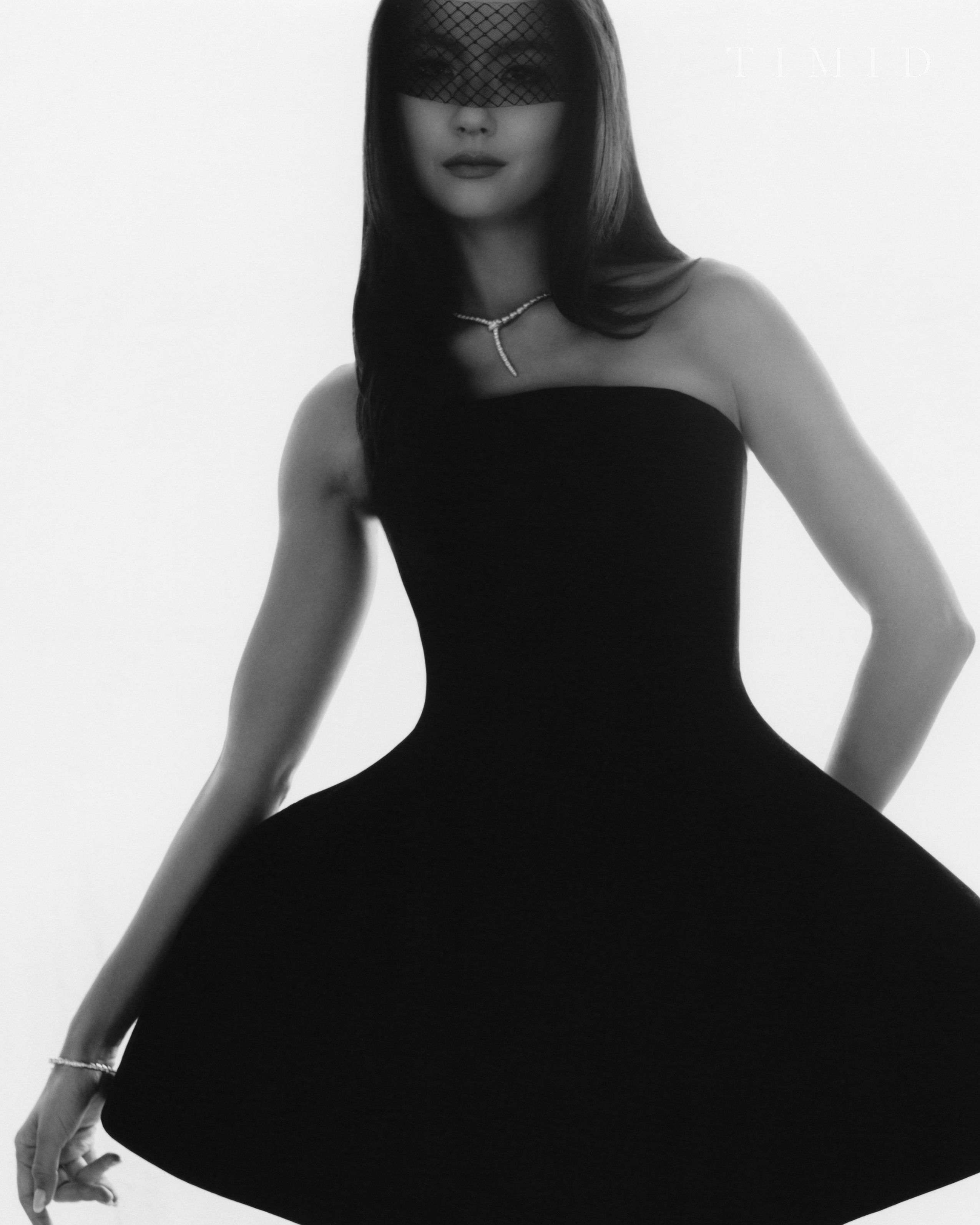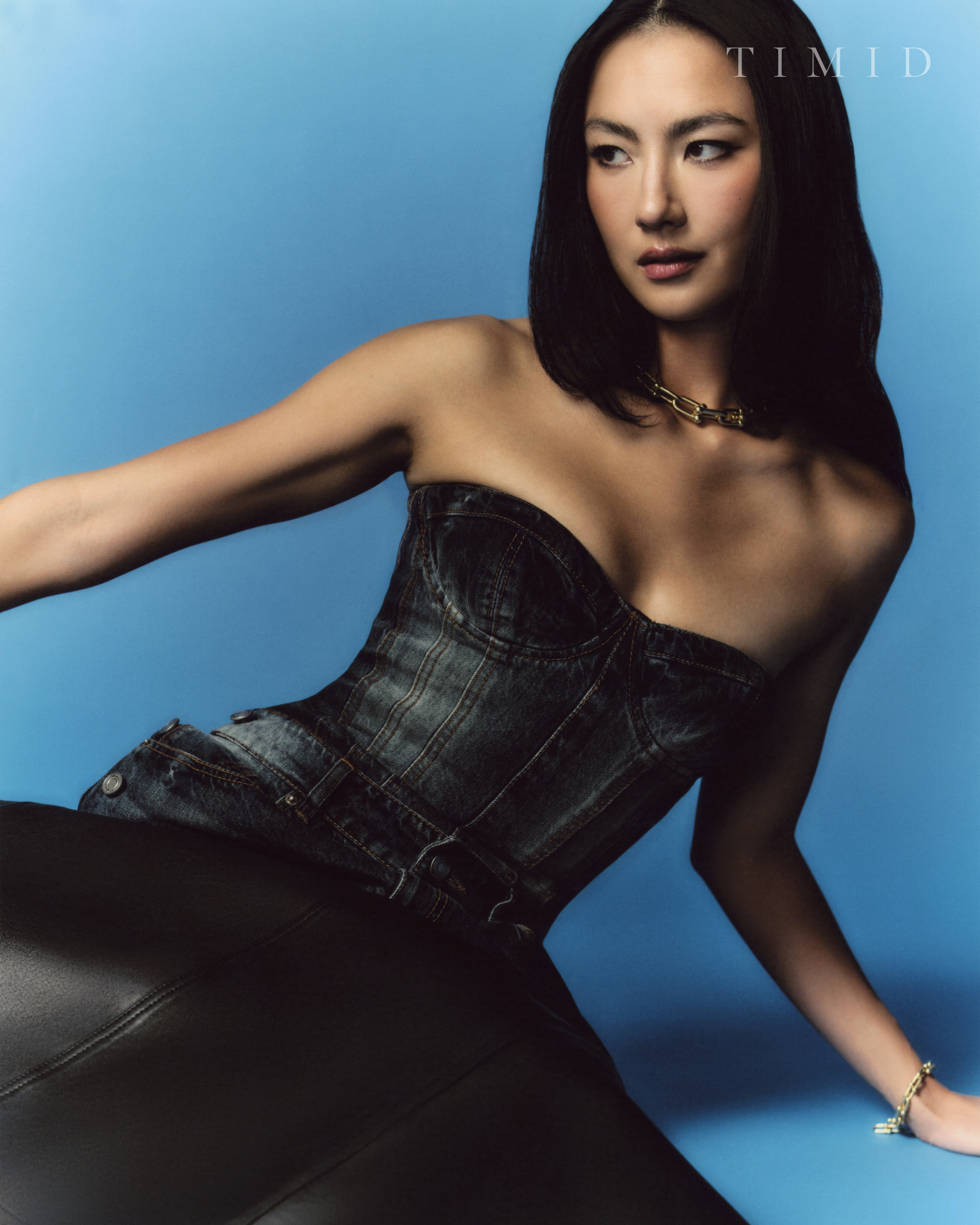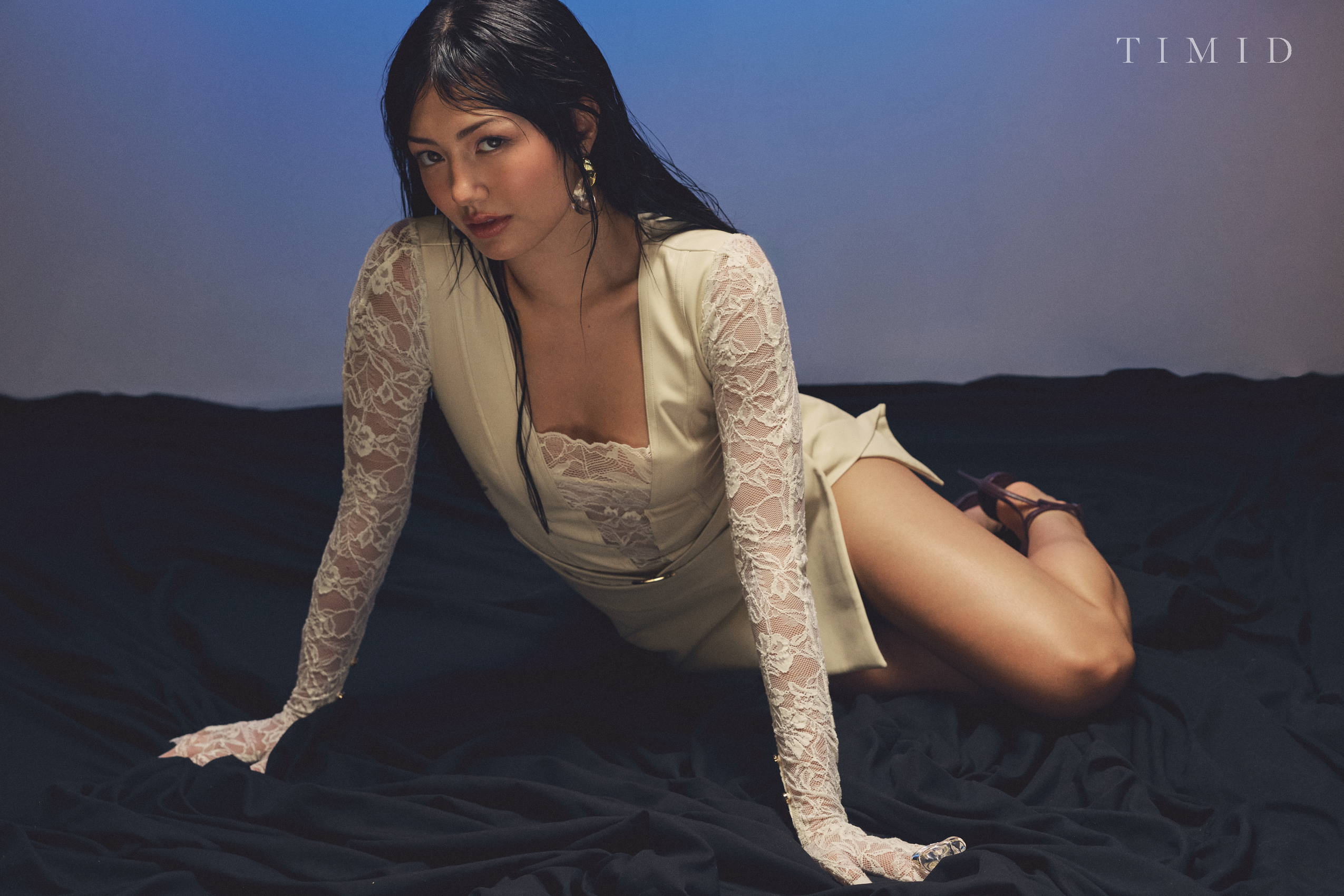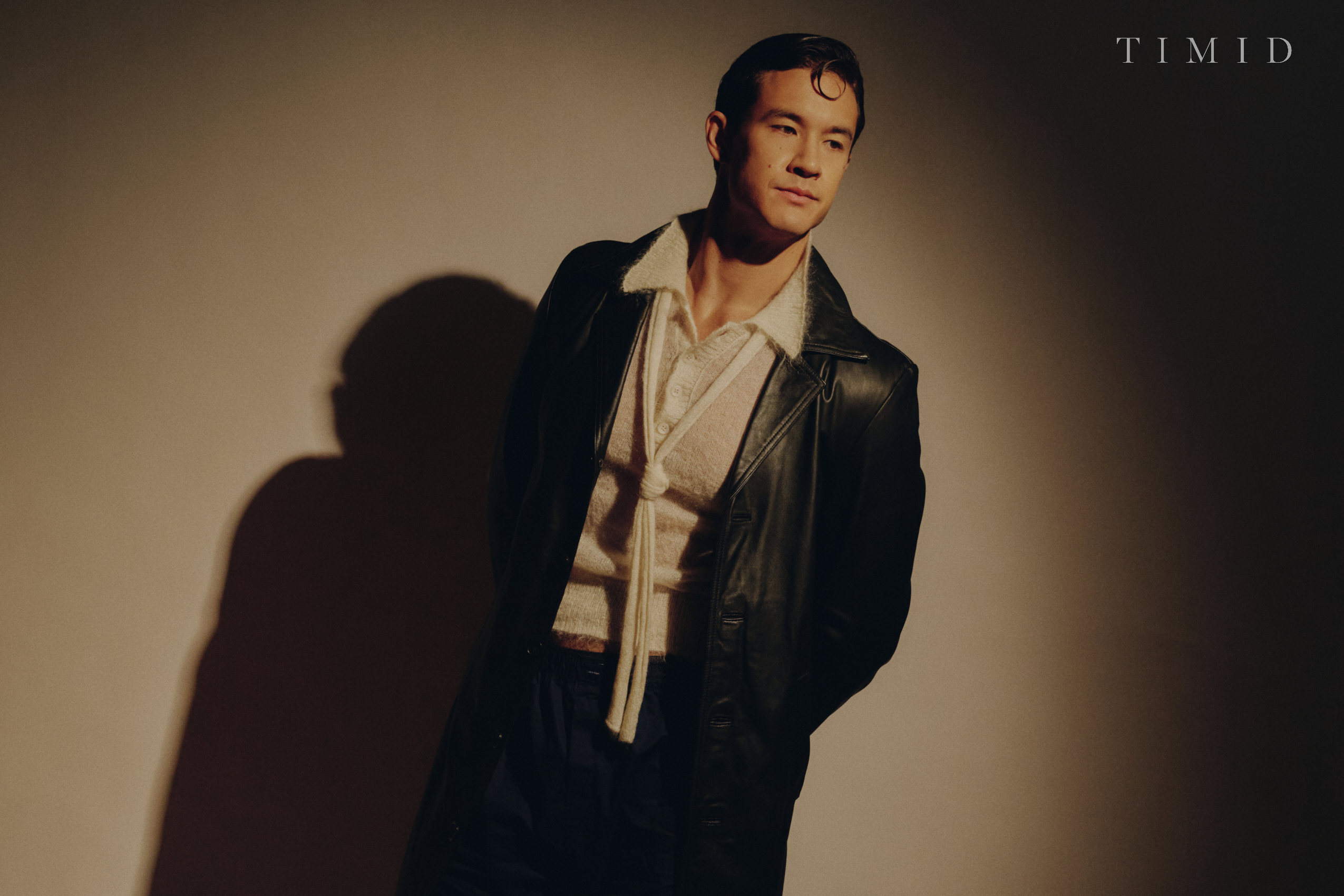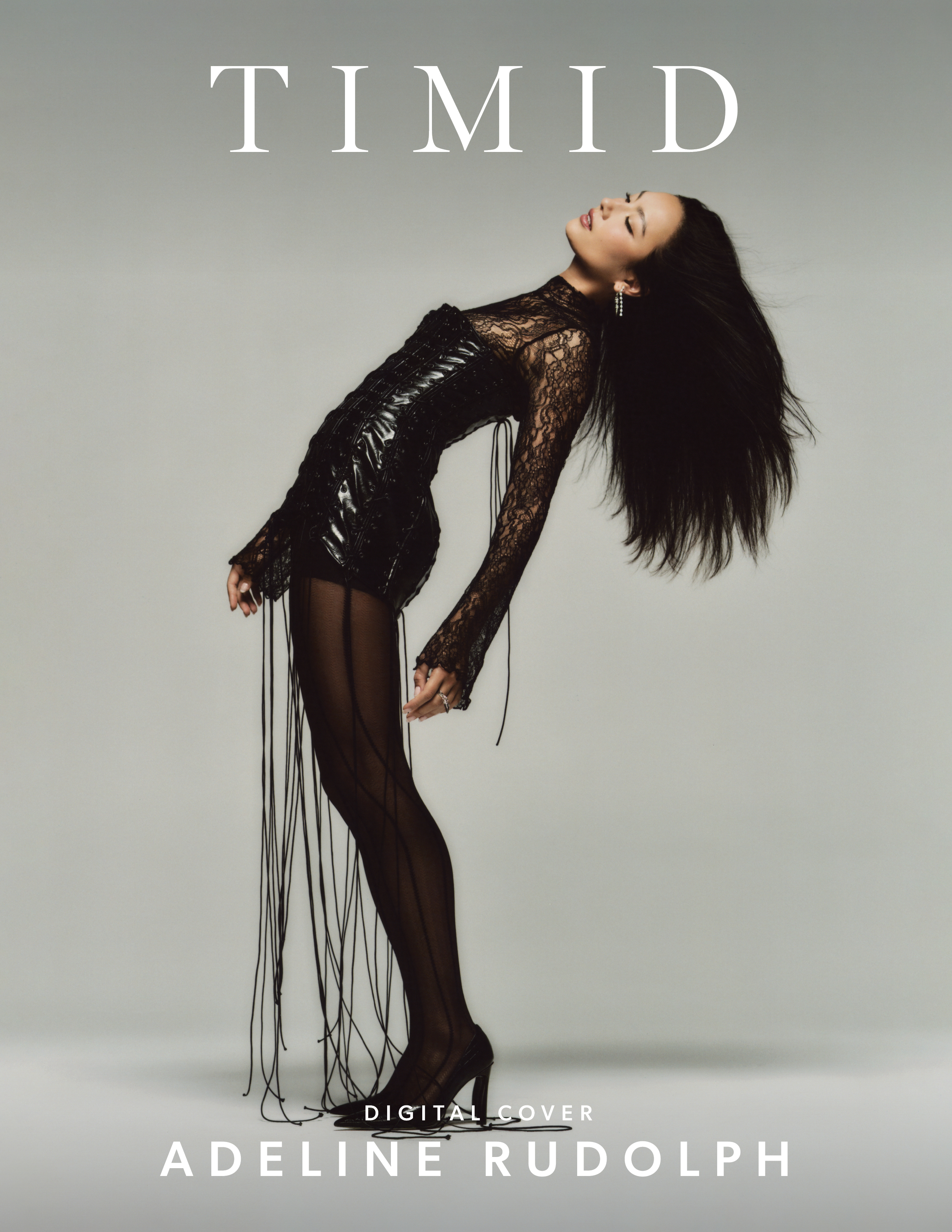
-
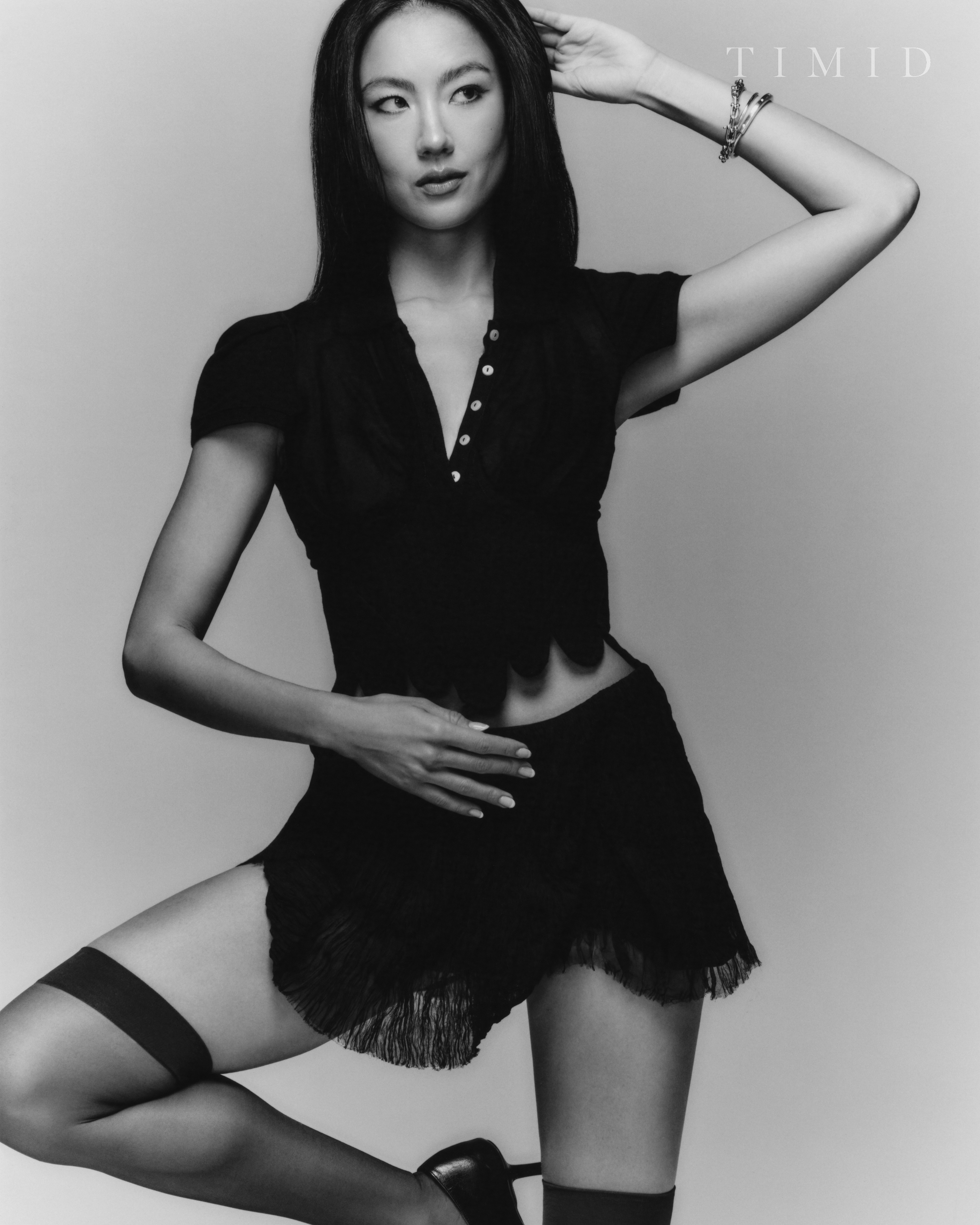
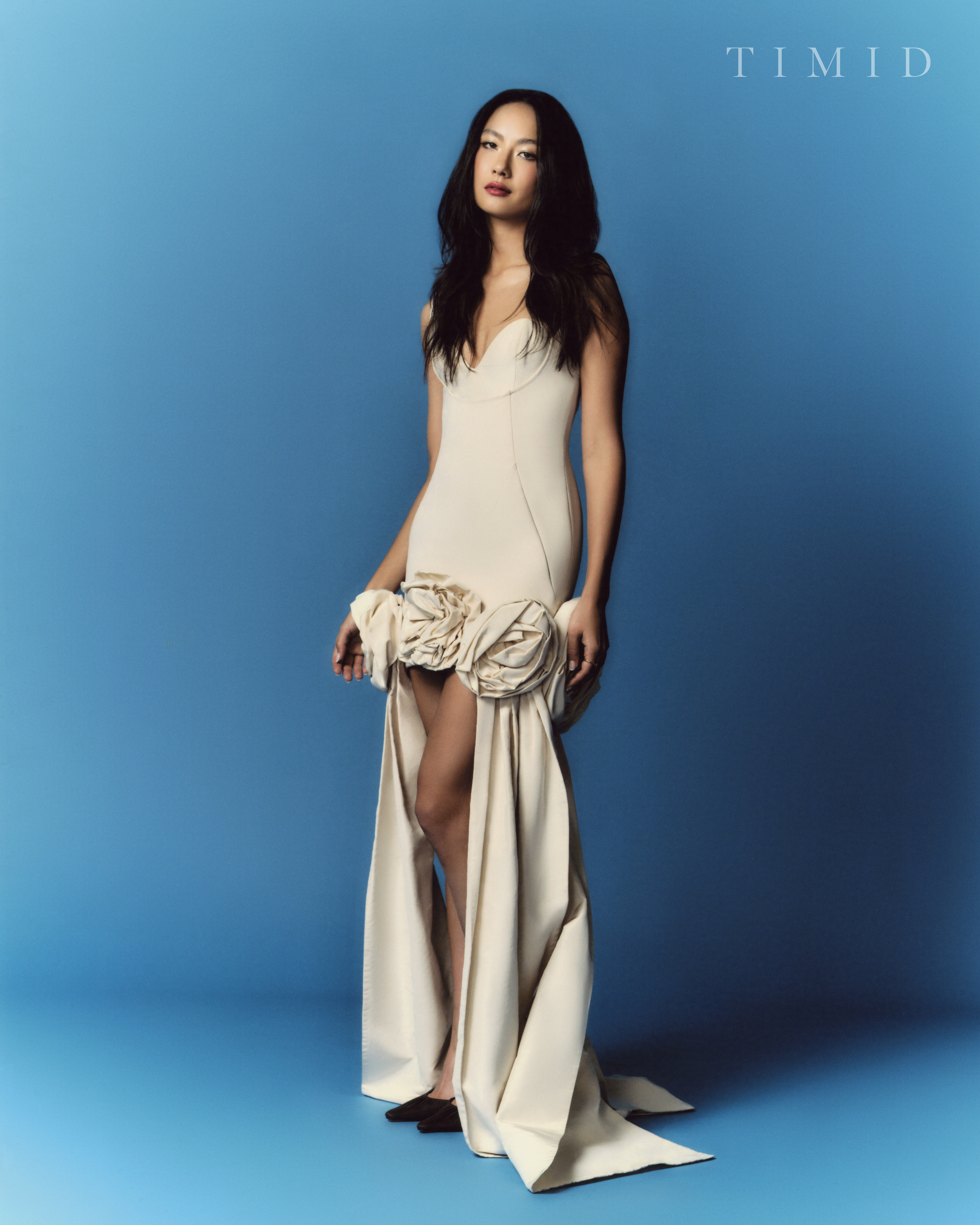
Talent: Adeline Rudolph @adelinerudo
Words: Daniel Anderson @danzstan
Photos: Michael Spencer @mikeyzpencer
Fashion: Amanda Lim @itsamandalim
Makeup: Sangwon Jeon @makeupsang
Hair: Joseph Chase @josephchase
Photo Assist: Melissa Mendez @melisamendesz
Fashion Assist: Jamie Maron @jamiemaron
Video & EIC: Henry Wu @hello.henry
Location: Dream Factory LA @dfla_studio Evan Duning @evanduning
The technical glitch at the start of this interview feels a little symbolic in hindsight. Adeline Rudolph’s camera wasn’t working on her end of the Google Meet call, and without hesitation she offered to switch platforms so we could keep things moving. It was a small gesture, but not an unusual one for her in my experience.
She may not remember this, but it wasn’t the first time she’s extended kindness to me. My first ever red carpet coverage event was the Unforgettable Gala in 2022. I was physically shaking, nervously trying to interview people I had grown up watching and still figuring out how to exist in that kind of space. During the afterparty, I didn’t really know anyone, and with social anxiety layered on top of an already overwhelming room of familiar strangers, I mostly hovered at the edges.
At one point on the dance floor, a song came on that everyone seemed to know the choreography to—everyone except me. I found myself near Rudolph and Tati Gabrielle, who both noticed and, without making it a moment, simply included me—showing me the steps, introducing themselves, and making what could have been an intimidating space feel unexpectedly welcomed. It wasn’t anything grand, but it shifted everything. Celebrities stopped feeling like a pedestal category of people and started feeling like people.
Adeline Rudolph has a knack for grounding high-fantasy stakes with genuine poise. In Mortal Kombat II, helmed by returning director Simon McQuoid, she steps into the iconic role of Kitana—a figure defined by lethal elegance and royal lineage. Within the mythos, Kitana is a princess caught in a web of inner conflict, torn between her burgeoning loyalty to Earthrealm and the crushing shadow of her adoptive father, the tyrannical Shao Kahn (played by Martyn Ford), while navigating the legacy of her true father, King Jerrod (Desmond Chiam).
The sequel significantly expands its roster, pitting Rudolph alongside franchise heavyweights like Karl Urban, who makes his debut as the brash Johnny Cage, and Damon Herriman as the sinister sorcerer Quan Chi. The film also features a mini-reunion for Rudolph; she joins Tati Gabrielle (cast as the formidable Jade), with whom she first shared the screen in Chilling Adventures of Sabrina.
This new guard joins a massive slate of returning favorites, including Ludi Lin as Liu Kang, Max Huang as Kung Lao, Lewis Tan’s Cole Young, Hiroyuki Sanada’s Scorpion, and Joe Taslim’s Sub-Zero.
Beyond Mortal Kombat, Adeline has carved out a steady presence in genre storytelling—often orbiting supernatural or stylized worlds such as Hellboy: The Crooked Man, Resident Evil, and Do Not Enter. Or take her forthcoming project Perfect Girl, an upcoming K-pop slasher film written and created by Lynn Q. Yu, who drew inspiration from BLACKPINK in shaping its tonal and cultural DNA. In the film, Adeline leads alongside Arden Cho and K-pop idol Somi. There is a clear pattern in the work she gravitates toward: heightened realities, often within horror-adjacent spaces, that explore what it means to be an outsider and what it can feel like to belong—or not belong at all.
Perhaps that resonance is not incidental. Born in Hong Kong to Korean and German heritage, and educated in an international school environment before later studying at University College London, Rudolph’s own background is one of cultural fluidity and constant translation between worlds. That lived experience of in-betweenness echoes through the characters she plays, figures who often exist between identities, loyalties, or realities.
Just as Rudolph helped me feel like I belonged during my first red carpet, she brings that same sensibility into her performances—infusing even the most fantastical characters with relatability More than fans, fight choreography, or genre spectacle, that might be her best secret weapon: the ability to make even the most extraordinary worlds feel, in some essential way, like home.
Adeline Rudolph: I think it’s a two-way street. For whatever reason, it’s definitely the genre that I get cast in the most. I personally love it because I feel like I get to step into a completely new world—one that, a lot of the time, is already an established IP, which is really lovely. For a lot of the projects I do, there’s research I can dive into in order to step into my character and hopefully portray her as authentically as possible. But I also love the supernatural element, because I get to do things that I wouldn’t be able to do in normal life.
AR: Yes—110%. I was the girl who would drag my best friend to horror movies, which she’s still upset about to this day. As for favorites—I mean, classics like Saw and The Texas Chainsaw Massacre. I also really enjoy a good psychological thriller like Shutter Island or Inception.
AR: Great question. I think what’s always fun for me is approaching things from a more journalistic perspective—trying to understand why my characters make the choices that they make. When I’m reading a script, once I’ve gone through it, I’ll then dive into the background. Specifically with Kitana, what was really interesting for me is that after reading the script, I did a deep dive into her lore in the games. It’s extremely rich for anyone who really explores the storyline. These characters have very complex, deeply layered relationships. Approaching Kitana by comparing what she goes through in the script with her background in the games, it’s always fun for me to merge those two worlds. Then I can approach everything she does in the movie with that added context of, “This is how she grew up.”
AR: With Kitana, what was fun is that she is an inherently grounded, poised, and graceful leader. Everything she does is for the purpose of protecting her people and the ones she loves—even if that means having to make difficult choices along the way. For her specifically, I didn’t have to do much to stay grounded, even though so many things are happening in the film. There’s the combat element, Shao Kahn, and all these external threats. But at the end of the day, she’s a royal, grounded princess who fights for her people.
AR: For me, what was really at the forefront while approaching her in this project was her relationship to every character she comes across. One thing I can definitely touch on is Kitana’s relationship with Jade. She’s someone Kitana shares a deep bond with. A lot of what Kitana does revolves around their friendship and the sisterhood they share. It’s also something that really grounds her.
AR: Being able to work with Tati again was a dream. She’s someone who’s very, very close to me. I did my first project ever with her, and we worked together for two years, so we already have a really strong pre-existing friendship, along with great chemistry on and off screen.
Seeing her step into Jade, I think this role was made for her. Tati is a badass through and through. She has a black belt in karate in real life, and she’s a strong, beautiful, kind human being. Those traits lend themselves so perfectly to Jade, and seeing all of that come together in her performance was mesmerizing.
I think people are going to be extremely happy and so excited to see Jade come to life in this way through her portrayal. Did it surprise me? Yes and no. It was amazing to see her in this role, but at the same time, I’m not surprised that she was so fantastic.
AR: I do have to preface that when I say I had a bit of a background in taekwondo, I had only just started that year, without knowing this project was even on the horizon. I think I had gotten my yellow or orange belt, and then this project came along, and I was like, “Okay, I’m even more motivated now.”
The training process was really intense. Did the taekwondo help? Yes and no. Kitana’s fighting style is a bit more fluid. I’d almost say dance-adjacent. She’s very elegant when she fights. So we trained a lot in wushu and kung fu to incorporate elements of those martial arts into her style. We also used elements of tai chi.
Our incredible stunt coordinators, and specifically Malay Kim, worked closely with me to drill the basics and shape the choreography so it looked beautiful, strong, but still elegant and fluid. It was hard, but I enjoyed training so much. We trained every day for a month in advance, and on top of that, I would stay after work to keep training. Anytime we could get extra time in, I was there. I really wanted to do the best that I could to give everyone the Kitana that I feel like they’ve been wanting.
AR: What was unique about this project is that we actually had a dramaturg on set. Her name was Nadia and she would work through the scenes with us. The preparation looked a little different than on any other project I’ve done. I would spend one, two, sometimes even three hours with her, and often with Tati Gabrielle as well, doing exercises and really getting into the core of our characters and the scene beforehand. All of that meant we would show up on set very prepared.
In terms of the martial arts, watching people like Tati, Lewis Tan, Joe Taslim, and Max Huang, they’re such incredible fighters. I would literally go to the set to watch them, even on days I wasn’t working, because it felt like a free ticket to the best show in the world.
More than anything, I felt extremely inspired by them and motivated to work harder and put in more hours. On the acting side, working with Karl Urban, who is just a fantastic human being and so funny, along with Josh Lawson and Damon Herriman—they’re all so talented. Getting to watch the way they work up close really is a front-row seat. It’s a gift.
AR: Oh my gosh—being able to work with Lynn, I love Lynn. Firstly, she’s amazing. She’s so kind and so incredible. Being a part of that project, also with Arden Cho, who produced it, it really healed the inner child in me in some way.
To be on a set where our director was Korean, and a large part of our production team was Korean, and to be surrounded by Korean actors, it was really special. I got to speak a lot of Korean on set, which is new for me. And again, my Korean is by no means perfect, but there was something about it that felt really wholesome and wonderful. I felt really grateful to be part of a project where I could really dive into that. And speaking of liking psychological thrillers, it allowed me to dive into a character that goes through a lot of psychological turmoil, which was both a challenge and so much fun.
In the same way that Kitana was a gift of a lifetime, Perfect Girl is also one of those projects that I am truly forever going to be grateful to have been a part of.
AR: I think the thing is, I don’t think you necessarily learn how to be a number one by being a number one. I think you learn how to be a number one by being part of an ensemble cast that has a fantastic number one.
For me, what I really loved was when I was on Chilling Adventures of Sabrina, and I’ve given her plenty of shout-outs for this—Kiernan Shipka was such a wonderful number one. It was my first time acting, my first time being part of a production, and I don’t think I really understood how things worked until after the fact.
But I’ve always been really lucky and really blessed to work with incredible people who either had more experience or were higher on the call sheet, and who never made it feel like they were number one just because of the number in front of their name.
That’s something I think I’ve really learned throughout my career. You want to treat everyone the way you want to be treated on set. And also, no character is small—every character is important. At the end of the day, you’re only as strong as the smallest character you have in your cast, because that’s how easily you can lose a scene if people aren’t committed to what they’re doing.
So there’s no real protocol of, “Now I’m number one, so I must do this.” It’s more that this is just how you fundamentally should treat people. Number one or not doesn’t really matter—you should always be treating everyone the same way.
-
Disclaimer: This interview was edited for length and clarity.
Mortal Kombat II was theatrically released on May 8, 2026.