-
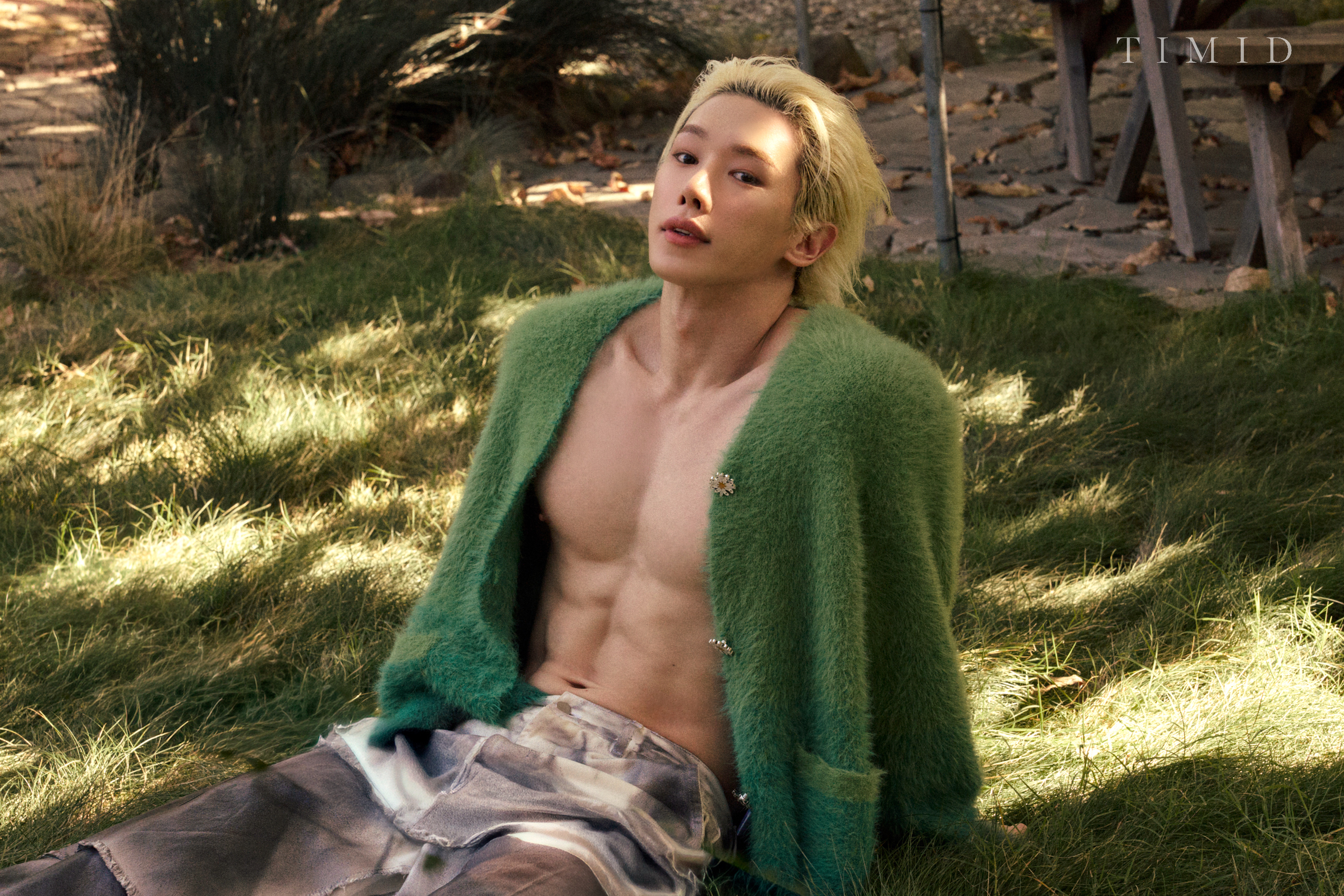
Talent: Brenda Song @brendasong
Photos: Michael Spencer @mikeyzpencer
Fashion: SK Tang @sktang__
Makeup: Jenna Nicole @jennanicoleofficial
Hair: Cherilyn Ferris @cherilynrachelle
Photo Assist: Mazhar Badani @mazharbadani
Fashion Assist: Juliana Nava Prado @navaguava
Video: Yong Kim @yongwkim
Location: DFLA @dfla_studio Evan Duning @evanduning
There’s a trend circulating online asking people to name their Disney Channel Mount Rushmore—a generational exercise that often yields the same rotation of icons, from Hilary Duff to Raven-Symoné, Miley Cyrus, Selena Gomez, and Demi Lovato. But for anyone within the Asian American diaspora, the monument is incomplete without the singular presence of Brenda Song.
Long before she became a household name, Song was a preternatural talent. Spotted in a shopping mall, she began as a child model and quickly moved into commercials for brands like Little Caesars and Barbie. By seven, she had made her screen debut in Requiem, an AFI short directed by Elizabeth Sung. A string of early roles followed, but it was her performance in the 2000 Disney Channel Original Movie The Ultimate Christmas Present that earned her a Young Artist Award and marked her arrival. She soon signed with Disney, becoming one of the network’s most versatile players, appearing in Phil of the Future and Stuck in the Suburbs. At 15, she received early acceptance to Harvard, but turned it down as her mother battled cancer and she stepped into The Suite Life of Zack & Cody.
With her role as the blithely absurd hotel heiress London Tipton, Song was a comedic force and is likely responsible for teaching an entire generation how to drive a stick via PRNDL. As the host of Disney Channel's Pass the Plate, she became a conduit for cultural exchange, illuminating kids to global foodways. With Wendy Wu: Homecoming Warrior, Song scored her first titular lead, blending her real-life Taekwondo chops with a narrative that finally put an Asian American girl at the center of the chosen one wuxia genre. In 2019, Song would once again help others find standing in their culture by voicing Anne Savisa Boonchuy in Disney’s Amphibia, the first Thai American lead in an animated series.
For me, as a Chinese adoptee, Wendy Wu was a reckoning. Seeing the mooncake scene with Wendy’s family at the dinner table stirred a yearning in me. I didn't know what a mooncake was then, and I remember feeling sad as if there were a defect in my own identity because I didn't celebrate those traditions.
In the years that followed, the erstwhile Disney star entered a period of recalibration. She took on more mature, often unexpected roles in projects like The Social Network, Dollface, and Blue Eye Samurai, gradually reshaping how audiences saw her and, perhaps, how she saw herself.
Today, Song enters a new era of career with the return of Netflix’s workplace comedy Running Point for its second season. Created by Mindy Kaling, Ike Barinholtz, and David Stassen, the show is inspired by the real-life story of Jeanie Buss, the president of the Los Angeles Lakers. Like the legendary Buss, the show's lead, Isla Gordon (Kate Hudson), must navigate the massive glass cliff world of men’s professional basketball after inheriting the Los Angeles Waves from a scandalous brother.
Song stars as Ali Lee, the Waves' Chief of Staff. Ali is a radical departure from the archetypes of Song's youth; she is a highly competent, take-no-bullshit power player who isn't afraid to swear or stare down a giant athlete. The character is inspired by Buss's own longtime confidante and Lakers manager Linda Rambis.
For Song, the role is a literal dream come true. A lifelong Lakers superfan, her obsession is iconic—she famously kept a life-sized cutout of Kobe Bryant in her dressing room during her Suite Life days and once even ended up in the hospital after hyperventilating while watching a game. Song has called Ali Lee a character she wishes she were more like, specifically for her unapologetic confidence. The very virtue Song helped instill in a generation of viewers who grew up watching her is the one she is finally, firmly claiming for herself.


Brenda Song: I realized that we’re a lot alike. This casting felt very intentional. Getting to know her and having these conversations was incredible. Seeing how she runs the ship behind the scenes at Laker games was more than anything she could have ever said to me. She leads by example. I respect her so much because she is tiny, but oh so mighty. If a player needs to get signed or a problem needs to be solved, they send in Linda because she gets things done. She has been so open and generous with her time. I remember when the Luka [Dončić–Anthony Davis] trade happened, I texted her at 10:00 PM like, "Is this real?" and she just replied, "Yep." It’s insane that I can text Linda Rambis in the middle of the night to ask if a trade is real.
I’ve never worked with two people who are so on top of everything, answering any questions or issues I have, while also doing photoshoots, traveling, and raising their kids so hands-on. I remember Mindy once emailed me saying she couldn’t make a table read because she was about to give birth—and then two weeks later, she was back on set. It’s incredible. She’s a superhero.
BS: When I was younger, acting was an after-school activity. I realized very early on that the only person I could compete with was myself. That’s how my parents raised me. I think that mindset is what’s helped me. Now, 35 years in, I still love this business so much because at the end of the day, this is my journey. Of course there are going to be difficult personalities and moments where people say things that hurt you. You can’t take it too seriously. If you start listening to all of that, it’ll drive you crazy.
It’s always been about doing my best and focusing on what I can control. That’s something Ali helps Isla realize, too: it’s not about competition, it’s about finding your tribe. I’ve been lucky to have that in my own life. My family is the reason why I am literally and figuratively breathing today. They drive me insane, but also drive me sane.
It's finding a good group of friends that helped me through all the madness. That's what Ali is to Isla, showing her that this is possible and that family is what you make it.
BS: I loved her arc this season. Ali can be blunt with anyone—but the one place she hesitates is with her best friend, who is now also her boss. And not just her boss—the big boss. It’s about navigating that shift and reevaluating both friendship and self-worth in the workplace. I think as women, we’re often taught to just be grateful to be in the room. But we deserve to speak up. We earn what we deserve.

BS: The first moment that comes to mind is when Disney didn’t want me to do The Social Network, and I pushed back. I remember thinking, this is unfair—I’m an actor.
This show is the first time I’ve truly felt like I have a say in the room. That’s the environment Mindy, Dave Stassen, Ike Barinholtz, and Kate Hudson created. They would text me asking, “What do you think?” and I remember thinking, you actually care about my opinion? After 35 years, that felt surreal.
I don’t think I realized how much I had suppressed that part of myself in the past. There were so many times, especially earlier in my career, when people would ask, “Why did you take this role?” or “Why didn’t you push for this character to reflect your background more?” But the truth is, I was auditioning for roles that already existed. At 15, I didn’t feel comfortable standing up for myself—that was very much the state of the industry at the time.
I feel joyous and hopeful to have seen the landscape of this industry change and grow, where women and people of color feel like we have a place in the room to speak up and stand up for ourselves. It’s hopeful to witness this shift in the industry over the last few years.
BS: With the caliber of actors that I'm surrounded by, they push you to the limits and they do it with the best intentions. Every day it’s who can break who? These people have such a history in different facets of comedy. Justin [Theroux], an incredible writer who understands dark comedy, Drew [Tarver], comes from improv and takes scenes to these unexpected, next-level places, and Scotty [MacArthur] is outrageous and also a writer.
I say that Kate is one of my favorite scene partners of all time because she has such a vast history in film. In film, sometimes you'll work on two scenes an entire day. On our TV show, we'll shoot six scenes in a day. She really sits with these characters and these scenes and grounds them in a way that you couldn't do without her experience.
It keeps you on your toes in every sense. It makes you want to be better. This is the first time that every single scene, I feel so incredibly challenged to stay sharp because you never know what's going to come out of some of their mouths. Every day feels like a workshop. I go home laughing, but I also learned so much. I’m nervous every day. I think that’s the best feeling, because it means I’m being challenged. At the same time, no one ever makes you feel incompetent. No one makes you feel like you have a bad idea. The room is so open to play and grow. That’s every actor’s dream.
BS: Within the last couple of years, I completely revamped my team. I was curious to work with people who didn’t know me or my history personally, and who could help reevaluate where I was in my life and career. I was in a very new place—being in a long-term relationship, settled, with two kids. I felt like a ball of clay again, ready for something new.
When I met with potential team members, my main question was: Where do you see me going? The most important thing is being aligned—having the same goals, and having people who are thinking outside the box. Being an Asian American actor in this industry, it's hard. You're always fighting stereotypes and to be authentic.
It was important for me to find people who understood that, but who would also challenge me—people who aren’t afraid to say no, or to push me to take a second look at something. I always say I see my career as a staircase. I just want to keep moving forward. I want to be challenged, and I want to keep working with people I admire and respect. At this point in my life and career, it is too short to be in environments that are unhappy or in jobs that don't fulfill you. So to have a team that understands that, that doesn’t ask me to compromise my morals or what I really want for their own motives is so important. I'm so lucky that I have a team that I trust and I love so much.


BS: My favorite thing is teaching my young kids to speak Hmong. I’m half Thai and half Hmong. Number one is teaching them the language, because the culture is so niche and we don’t really have a written history.
Food is a huge part of it. My grandma lives in Sacramento, and she sends us boxes of Hmong food and ingredients. When I was pregnant and after I gave birth, she would send things like the Hmong pregnancy soup with the black chicken and herbs. Mac was actually the one making it. He was like, “I’m making Hmong pregnancy soup”—and I would just sip the broth. It was so funny.
Now that they’re old enough, I want to take them to Hmong New Year. The closest one is in Fresno, so I’m really excited about that. My grandma even brought over traditional Hmong outfits for them.
We just want them to understand that this is part of who they are. I don't want them to lose that. It’s the same way that my parents did it. They never made it a big deal. It was just a part of our life. I want them to know that side of their family. My grandma comes and visits, and she doesn't speak a lot of English. It's really fun now that they understand certain things, and understand Hmong more so that they can actually talk. It's my favorite.
BS: That means so much. When I was younger, I didn’t fully grasp the impact of representation—I was just doing my dream job. But now, especially with kids, I understand how important it is to see yourself reflected on screen so you don’t feel alone.
Growing up, the only Asian people that I saw on TV were Jackie Chan, Jet Li, Michelle Yeoh. Thank God for Lucy Lu and Ming-Na Wen later on. My favorite part of my job is being able to take people out of their reality for 23 minutes or however long, and bringing them joy and commonality. Feeling seen is to understand that we are uniquely ourselves. We can't change that and we shouldn't. We should steer into who we are because there's no one else like you. Regardless of where you come from, what your background is, what your culture is, where you live, you are uniquely yourself. When media can help make you feel seen and make you feel more comfortable in your own skin, that's so powerful. When I hear something positive like that, it makes me really happy. I am so grateful. Thank you for watching and I'm so glad that you had such a positive experience.
-
The second season of Running Point premieres on Netflix on April 23, 2026.
Disclaimer: This interview was edited for length and clarity.