-
Talent: Madison Chock @madisonchock
Words: Daniel Anderson @danzstan
Photos: Ashley Seryn @ashleyseryn
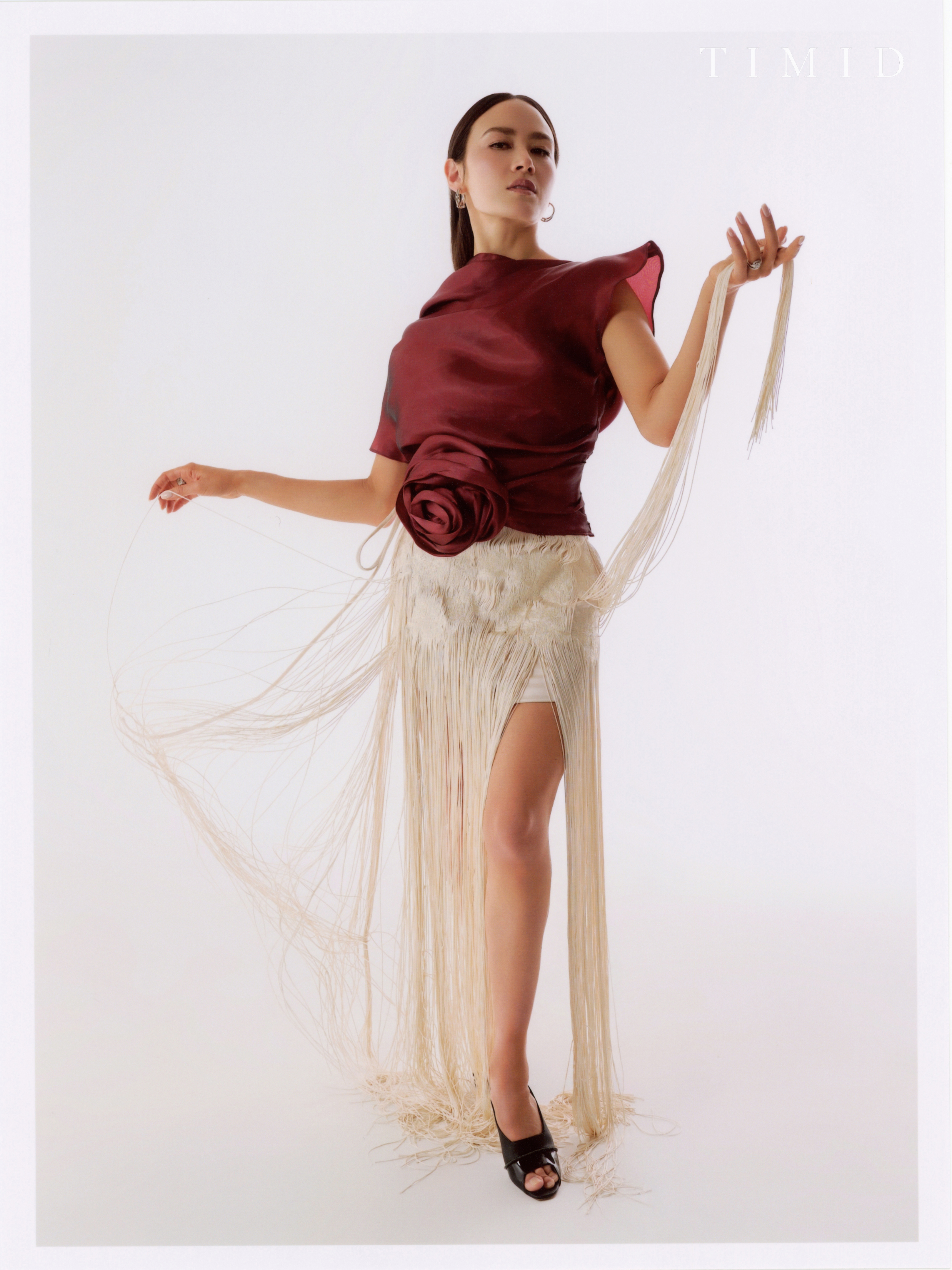
Fashion: Lisa Hoang @lisanhoang
Makeup: Kelly Zhang @kellyzhangagency
Hair: Brittany Truong @brittanytruongartistry for @kellyzhangagency
Photo Assit: Jer Aquino @jer.aquino
EIC: Henry Wu @hello.henry
This is probably the wrong place to admit that I'm not a sports person. For four years at a stretch, sports don't really exist for me—and then, every four years, they do, for about two and a half minutes at a time, set to music, on ice. I couldn't explain a Grand Prix standings table. But I have never missed an Olympic ice dance final, because to me, it has always felt like magic.
Maybe it started with Disney Channel's 2005 films Go Figure and Ice Princess. Maybe it was watching Kim Yuna's iconic free skate at the 2010 Vancouver Olympics, turning a rink into a stage. But more than anything, it's the ephemeral nature of the performance that captivates me.
What gets me is that it's art. A painter can hang a masterpiece on a wall for decades. But a skater trains for years—early mornings, aching bodies, tiny mistakes corrected again and again in nearly empty rinks—all in service of a few minutes that happen once and then are gone. There is something unbearably moving about that kind of impermanence: it asks everything of a person and gives them, in return, one singular chance to be unforgettable.
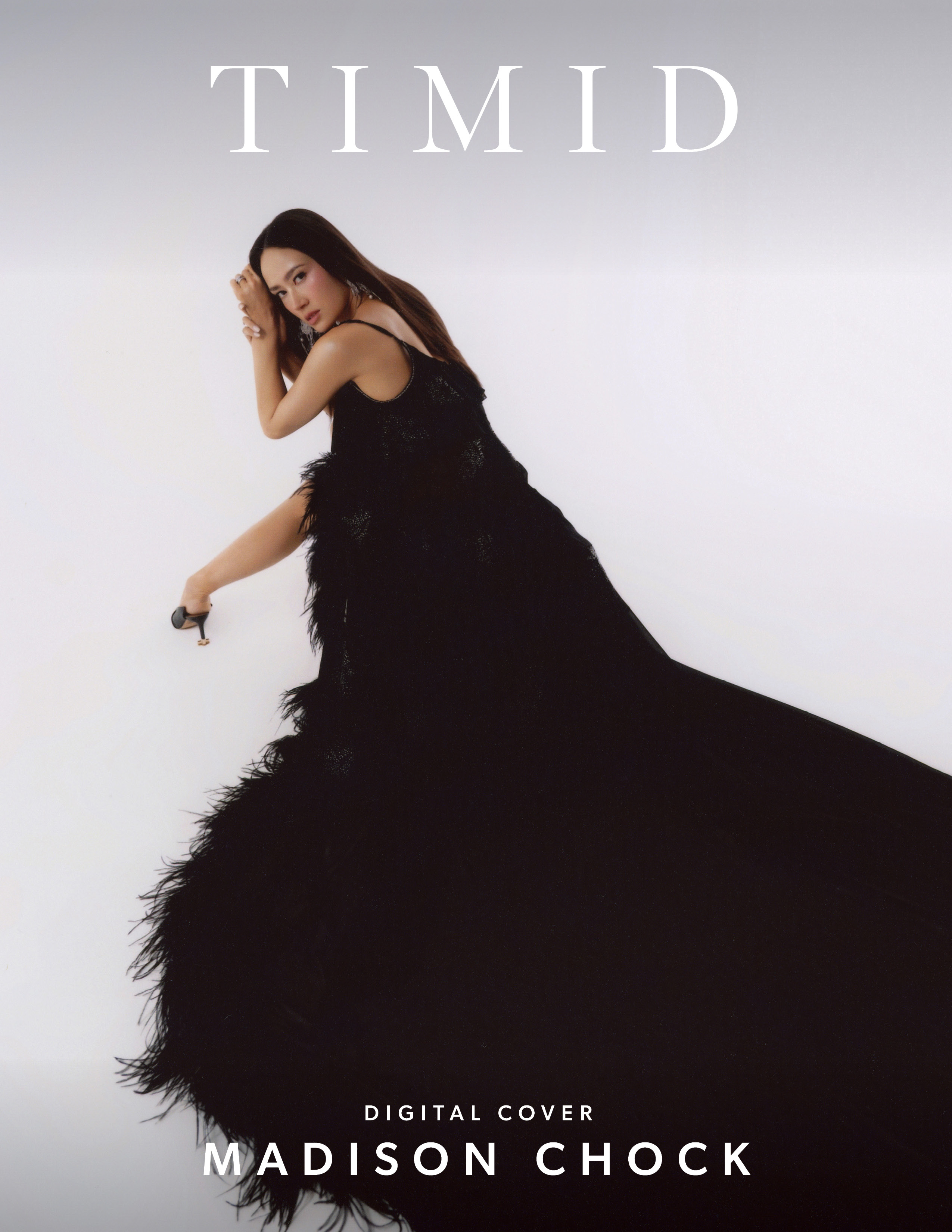
So this is about the artist as much as the athlete. That artist is Madison Chock.
Over two decades, Chock has built one of the most decorated careers in ice dance with Evan Bates, her partner since 2011 and husband since 2024: seven U.S. titles, five World medals, and three World titles—the first three-peat by any U.S. ice dance team. At the 2026 Milano Cortina Olympics, they won a second consecutive team gold—the first team from any nation to do it twice—and earned individual silver, skating to a searing rendition of the Rolling Stones' "Paint It, Black."
A medal count only tells you what she's won, not how she gets there. Chock is a cinephile. (Pride & Prejudice is a personal favorite). It shows in how she talks about her programs as roles to inhabit. Before a blade touches the ice each season, there's a search for the right music and the right story. It's akin to an actor preparing for an Oscar-worthy part, built from the inside out, where every choice has to mean something even if it only lasts seconds.
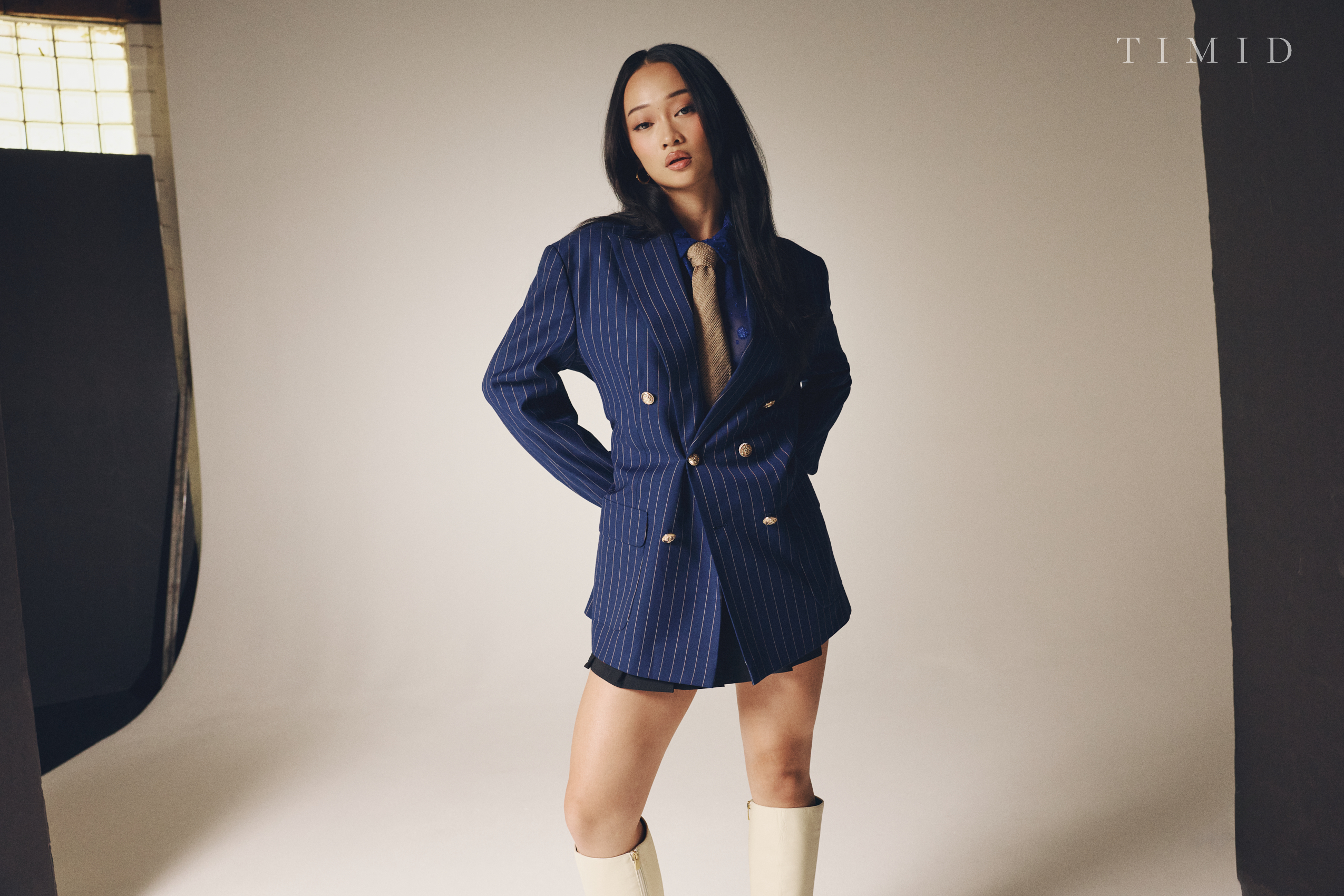
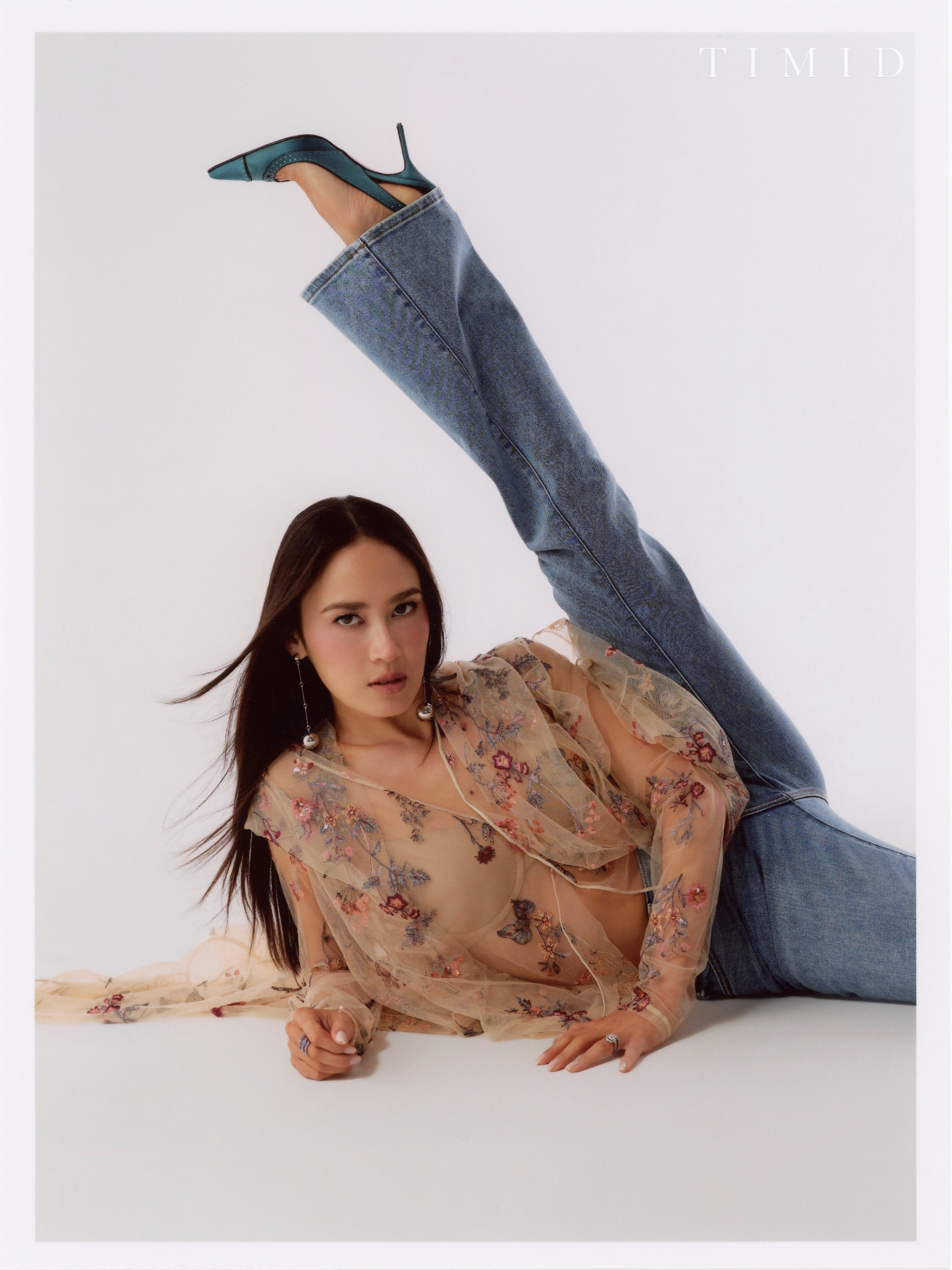
That instinct carries into how she dresses the part. In 2023, Chock founded her own label, Madison Chock Design, designing not just her and Bates's costumes but those of a growing roster of competitors—ice dance teams from Spain, Australia, and Georgia have all skated in her works. One could argue it’s countercultural to be spending your off-hours dressing your competition. But it tracks: for Chock, competition and craft were never separate.
The point was never only to win. It's to beat the clock built into the art form itself. Watch Chock long enough and you start to suspect she's found a loophole: performances that should evaporate the moment they end instead become a beautiful fixture. That’s her real magic. For someone like me, who shows up once every four years knowing little about the sport, that's more than enough of an invitation to stay and never want to leave.

Madison Chock: Absolutely. My parents have had such a huge impact on who I am as a person, and I feel so lucky because I had such a wonderful childhood. My mom was a singer in Japan and a dancer. She's incredibly artistic and creative, and I think that's where my love of the arts, fashion, hair, and makeup really comes from. I used to watch her get ready in the mornings when I was a kid, and she had such a huge influence on me.
But also my dad as well. He was always creating games. I was obsessed with Pocahontas when I was a kid, and my dad built me a canoe. He built the shape of the canoe out of cardboard boxes and drew on it. He put it over my little Radio Flyer wagon, and I would sit in the wagon. He made an oar out of a paddle from Home Depot and drew on it with markers.
MC: Honestly, seeing my parents be so creative during my childhood...now that you mention it, I'm really reflecting on it. I see how they really had such a huge influence, and probably the reason I love design and was so fearless about trying my hand at it every chance I got.
I remember one day I really loved this pink cutout dress, and I wanted to make it. We didn't have the fabric, and my dad just made it happen. He made it with newspapers. He cut out the shape of the dress, stapled it together, and made me the same dress out of newspaper. Granted, it wasn't pink, but it was so creative.
I think seeing that showed me you can make it happen if you want it to happen. If you can dream it, you can make it a reality. That's the influence I take into my designs. If I can think it up, there's definitely a way to make it happen in real life.
Whenever I'm thinking about designs for skating costumes, I'm trying to create something different that I haven't done before and really push myself outside the box. I want to try something that brings fashion to the ice in a more modern way.
TM: Do you have a favorite rabbit hole you've fallen down while researching themes or designing costumes?
MC: I'm always down a rabbit hole, and usually it's on Pinterest. I remember when I was designing our alien costumes, I was really inspired by deep-sea creatures and how otherworldly they looked. I drew a lot of inspiration from their colors and movement, so my Pinterest feed was full of deep-sea creatures for a long time.
MC: There's so much, it's an all-encompassing thing. It's what we do in the ballet studio with our ballet coach. She actually brings out this kind of Stanislavski method, and we go really outside the box when we're creating the program and diving into characters.
It really pushes us to not be afraid to try new things. We're always in there doing the wildest things in this ballet studio, but then when we go on the ice, we're so much more comfortable to explore, try things, and really push ourselves creatively.
It all comes together with the storytelling, too. We work with a Broadway coach, and her movement and the way she tells stories through her movement is really inspiring. She encourages us to create a story and a backstory for our characters so that when we're in the piece, we know the depths of it. We don't necessarily share that story with the audience; it's more for enhancing the creative process.

MC: It has honestly been such an honor to design for my fellow teammates and competitors. I think there's something really special about helping someone feel their very best when they step on the ice because it changes everything about your performance.
If you feel good and you feel confident, it just radiates out, and people can get drawn in. There's a magnetism that happens when you feel your best on the ice, and then you can project that to everyone and share it with the audience.
Seeing how much that affects people's mindset and well-being, and the way they move, is really inspiring. It's something I think about whenever I design for other people: What is going to make them feel like the best version of themselves at this moment? I try to bring that into the design.
TM: How much does a location influence or shape your performance? I'm based in Seattle, and I feel like I have a chill energy when I'm here, and then when I go to LA, I find myself being more extroverted and social. When you're traveling all over the world, do you find that different locations influence you in different ways?
When they're really invested, and you can feel their love of the sport when they're sitting in the arena, it's in the way they cheer for you and support the athletes. That is the most gratifying and fulfilling experience—when the arena is completely packed and everyone is excited to be there, just to cheer on and support the athletes.
That is what elevates all of the athletes more than anything else. Personally, I have found that we've had incredible crowds in Boston. They love figure skating in Boston. Every time we perform there, it's been so special. It's also been incredible in Japan, but also Milan. It was amazing to see the support and how many people came out.
They lift us up. It's a really fulfilling experience to feel like everyone in the arena is with you in that moment—present for one moment where you can just connect with them and connect with the magnitude of the moment.
Even if it's something positive, we try to reinforce that openness and communication. I think that's something we've brought forward from skating into our off-ice life, because skating can be really all-consuming at times. When you get home from the rink, you're drained mentally and physically, but you still have this relationship to nourish and look out for.
We want to make sure we're filling each other's cups as best we can, while also recognizing that we're both tired or a little depleted from the training day. That's something that has definitely evolved over time, and we're still working on. But we’ve learned that when we put our relationship first and foremost, ahead of everything else, that’s when everything flourishes.

MC: when you're in the midst of an intense training season. You really need to find a way to get your mind off what's going on at the rink or how your body is feeling.
We love watching comedies. We try to keep it lighthearted whenever we watch a show because we find that really affects our mood. We listen to music, we love playing records, and we love hanging out with our two toy poodles. That is probably the biggest source of joy that we have in our lives—our dogs.
We also love going for walks and just getting outside and being in nature, because you can be cooped up in the rink and not see the sun for most of the day, especially in the winter months. We take full advantage of it when the weather gets warmer and just love being outside, being in nature, and clearing our minds.
We also try to leave our phones behind, do a little detox, and just enjoy that time.
TM: Do you have any comedy shows you recommend right now that you're watching or loving?
MC: Right now, let's see. I love Nobody Wants This, and that's one of my new favorite shows. I love The Good Place, another Kristen [Bell] one. The Office is a classic go-to. You can just put that on in the background and have some good laughs. Schitt's Creek, yeah. Beef—I love the show Beef. Sometimes it's a little more drama than comedy.
MC: It honestly means so much. Seeing that representation across almost all platforms now is really, really powerful.
Growing up, Michelle Kwan was my biggest influence. I think I just related to her because seeing a Chinese American woman growing up in sport was not common at that time. The fact that she was so incredible, so dominant, and had this warmth that radiated from her when she performed was incredibly inspiring.
When I was a kid, being half white and half Asian, I often felt like I had Asian friends and I had white friends, but I felt too not Asian enough to really hang with the Asians, and then I didn't look white, so I wasn't white enough to hang with them either. Everyone was welcoming, but at the same time, I felt caught in the middle and not really in one place or another.
I think now there's such a huge community of Asians, and we've carved out our own little niche that's really special. To see the blend between cultures, and to know you don't have to be all one thing or all of another, but that there's this beautiful fusion, has been really meaningful.
It feels really good to be a part of that community and feel that acceptance. Not that I ever really felt like an outsider, but in a way, I kind of did.