-
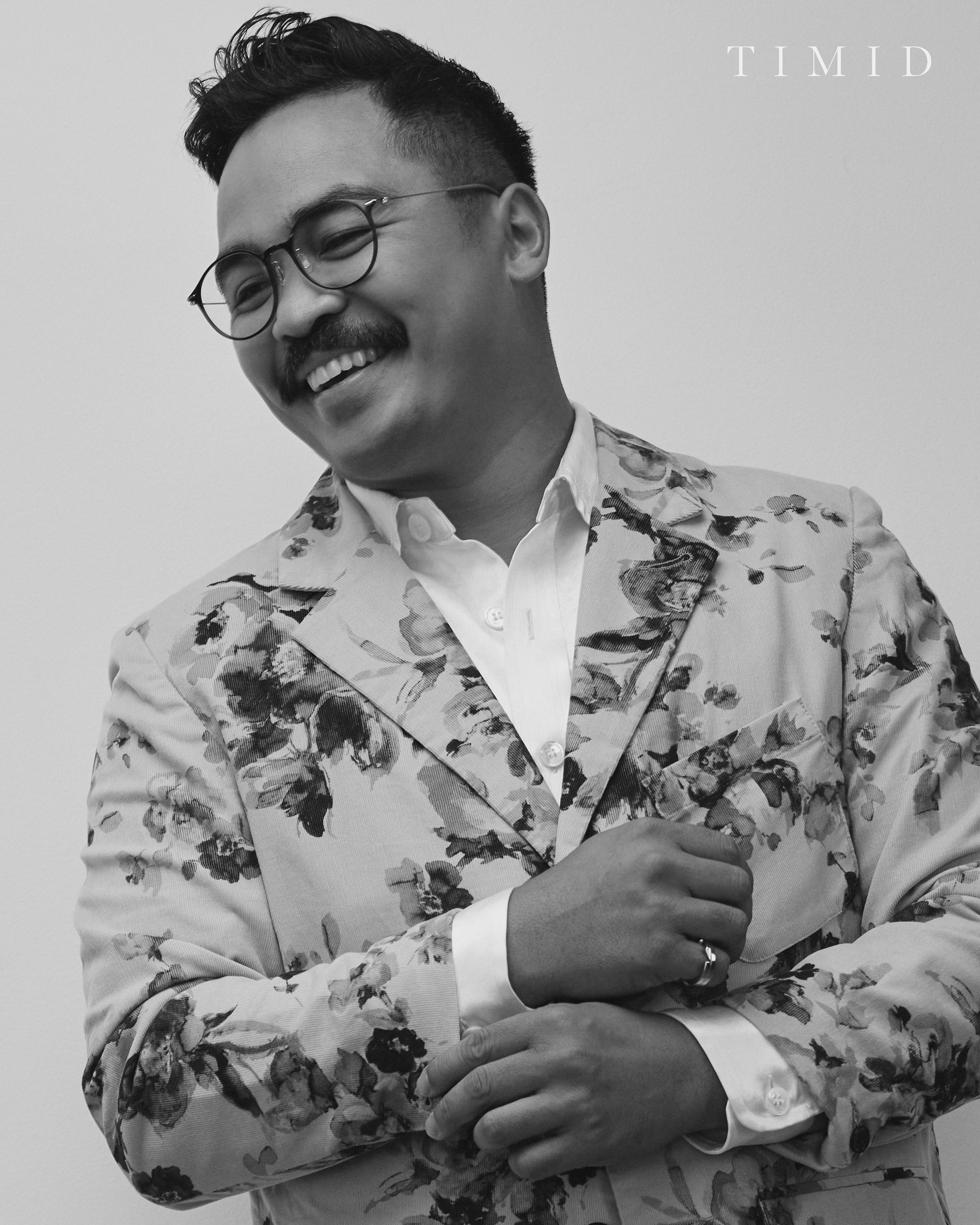
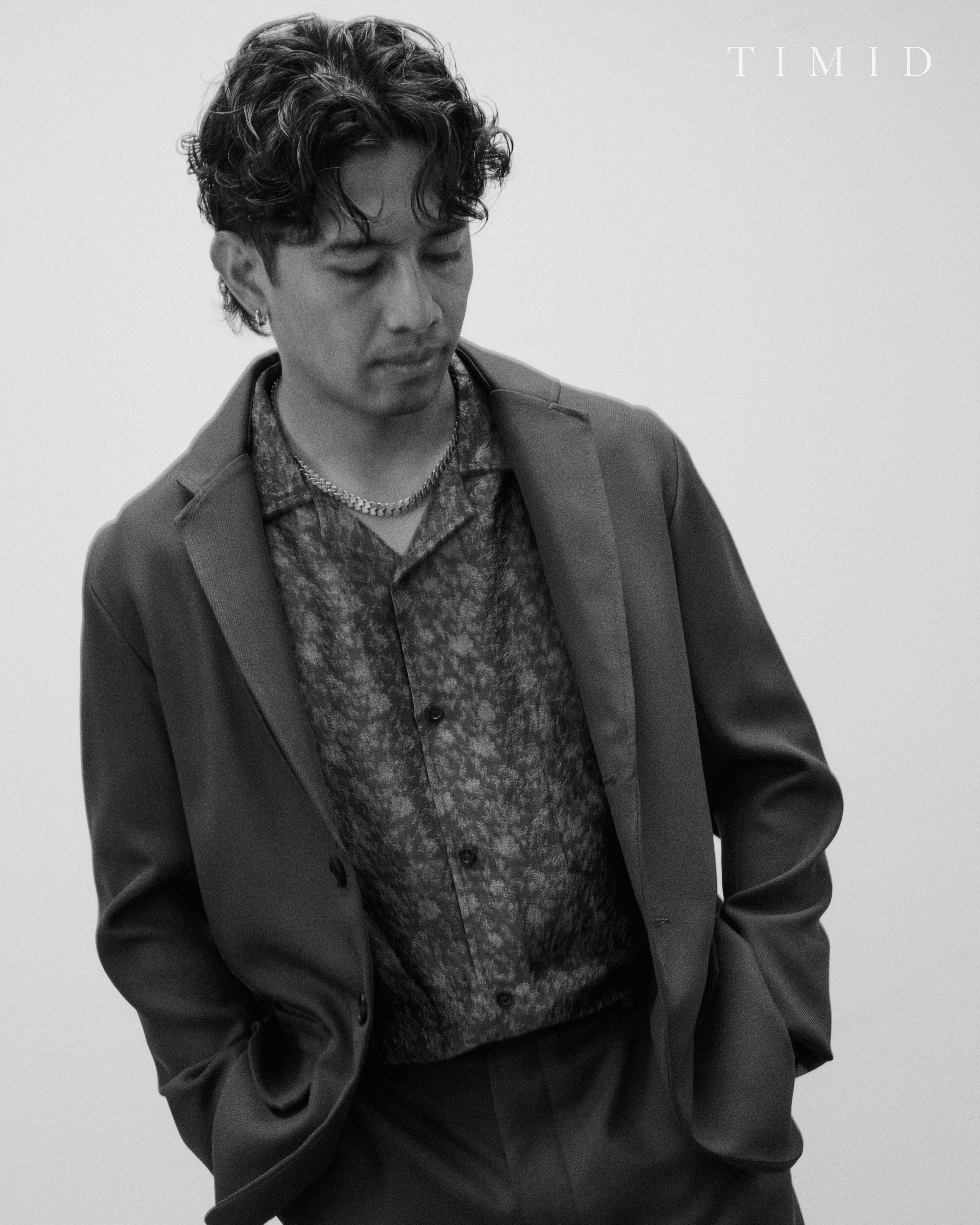
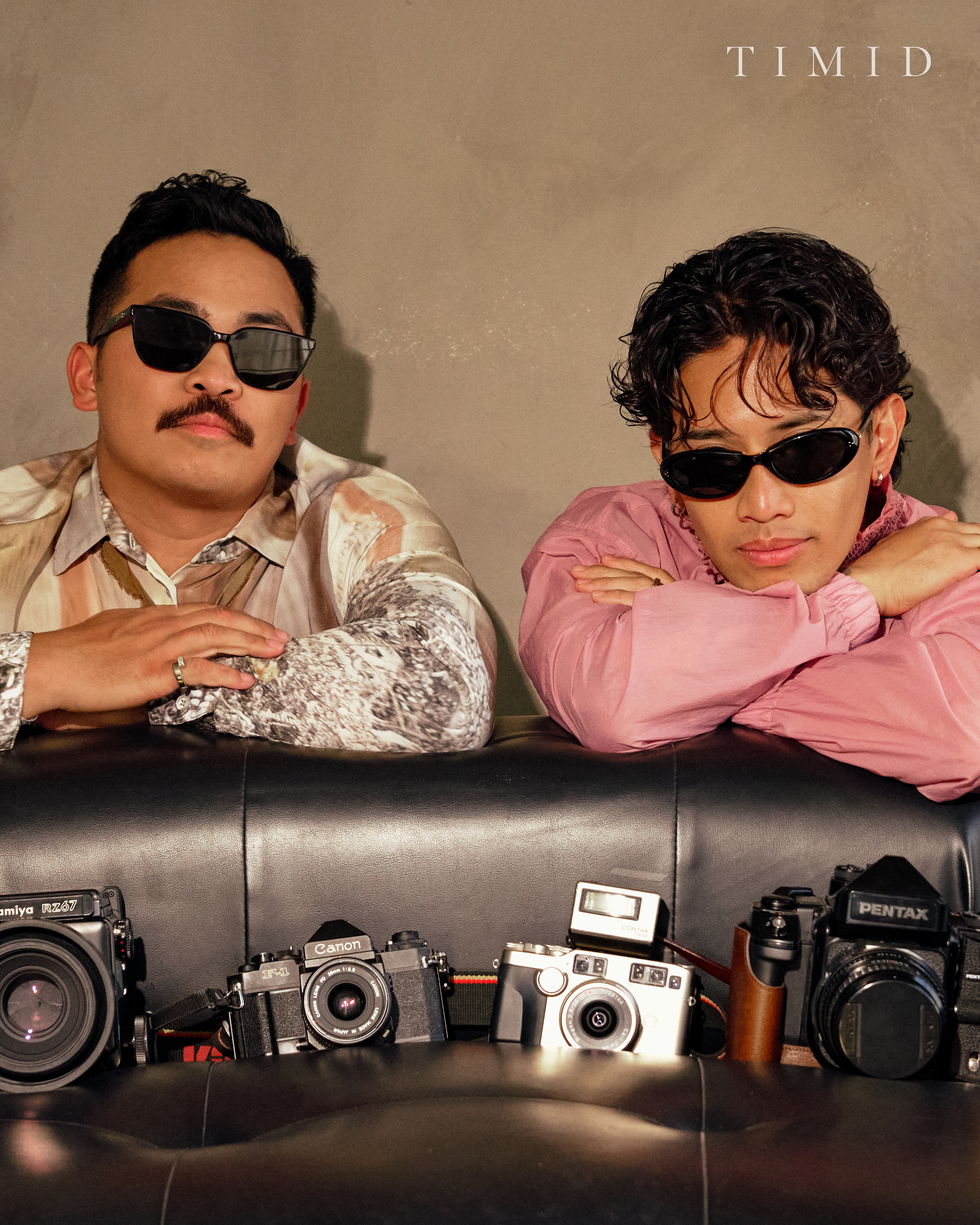
Talent: Charles Kenneth Guinto @charlesgambino & Leo Cabal @leocabal, The Lounge Booth @theloungebooth
Words: Nathan Wang @nathanmiwang
Photos: Henry Wu @hello.henry
Fashion: Lisa Hoang @lisanhoang
Makeup: Christopher Miles @christophermilesmakeup
Location: Slip Studio @slip_studio
Before there was a studio, there was a shed. The Lounge Booth founders Leo Cabal and Charles Guinto kept everything in it—the lights, the stands, whatever backdrop they'd managed to buy—because a studio was out of the question and for a while at least, so was most of the equipment. In The Lounge Booth’s early days, the duo had spent two years working events for free because they believed in their concept that a photo booth could be more than the traditional iPad in a box. It was truly experimental at the start, but luckily, Guinto was no stranger to experiments.
Guinto took photos on his days off from his laboratory job while Cabal shot photos of bugs and flowers in his backyard. On face value, neither of them had a business, but both had a hunch about what people were missing at once-in-a-lifetime events, like weddings.
The first time their concept worked, nobody knew what they were looking at. The pair had built a full set at a wedding during the pandemic—the kind of set-up guests would expect at a magazine shoot rather than a reception. When the ceremony ended that night, the guests stopped short of Guinto and Cabal. There was neither a Lounge nor a Booth, but two guys with a camera, a set they’d built themselves, and an unmistakably positive attitude were enough.
"We treated everyone as if they were on a red carpet, and we gave them that 15 seconds of fame and treated them as if they were a celebrity or a model," Cabal said. That was the whole idea, and it was more radical than it sounds. "But when you take that experience and give it to a normal person, it's totally different, because they've never been shot before. No one had ever pushed this idea of professional photo shoots at a live event."
By the end of that first night, Cabal and Guinto officiated the marriage of two distinct ideas of their own, and they had a business. "Because before this, we were just freelancers working separately," Cabal said, "and then after this day, it was just like we had a business overnight." Four years later, The Lounge Booth runs sets for Disney, Netflix, and Apple and has become a fixture at Gold Gala, the most viewed multicultural gathering in Hollywood.
For Cabal, photography began the way most hobbies do. “My love of photography came from just wanting to create a high-quality image," he shared. "Coming from a Nokia, when I finally saw my friend who had a DSLR, the quality was just night and day. I just practiced on my own and learned the craft. It was just my curiosity and passion to learn that drove me.”
Guinto’s version runs slightly longer and stems from his time in the lab. While he’d been shooting since his sophomore year in high school, his lab job supplied the comfort of a 401(k) and a safety net. For a first generation Filipino, a stable job had been everything. Leaving the lab meant walking away from the security his upbringing had taught him to protect. "I think my ideal scenario was that I was young enough to bounce back," Guinto said. He gave himself three months of savings and a way out. "If it didn't work out, just go back to the laboratory. But it worked out pretty well,” Guinto said with a chuckle.
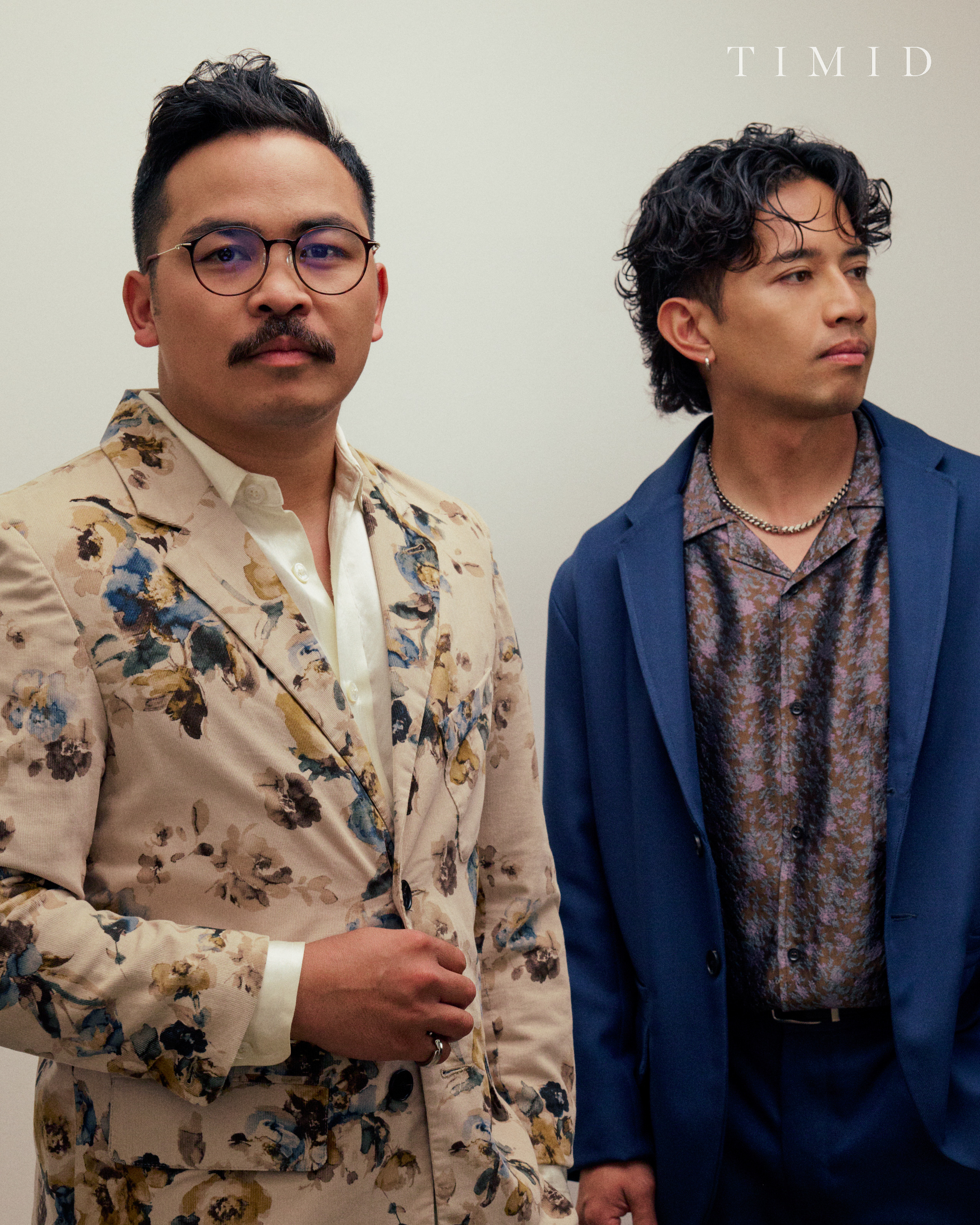
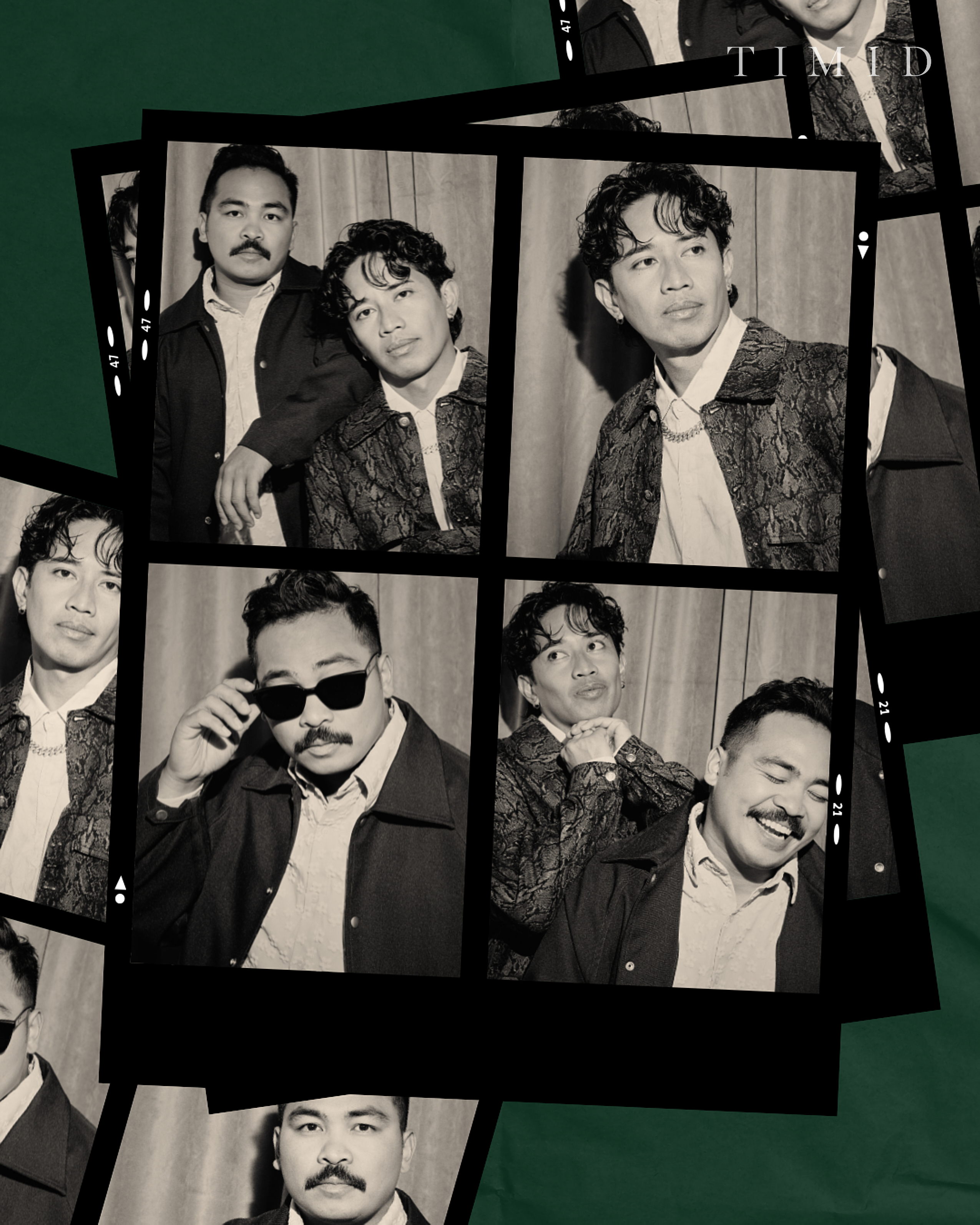
What the two of them found, once they were shooting full time, wasn’t a better business model than the one they first discovered at that pandemic-era wedding shoot. It was a gap nobody in the industry had bothered to give a name.
“There was no soul in having a photo experience," Guinto said flatly. “The industry was missing a human experience that people rarely have. You're seeing people who have never really been in front of a camera before, and they're nervous." That nervousness is the duo’s craft that most photographers would consider unusable.
“The fact that we've been shooting weddings for about 12 years, we're able to really distinguish how you make someone comfortable within 15 seconds," Guinto said. “Having the skill of being empathetic, reading body language, knowing what to say, but also how to diffuse any tension has to do with it.”
Ask whether that skill can be taught, and both Guinto and Cabal hesitate, which speaks volumes to The Lounge Booth’s intricate craft. “I think some parts of it could be learned, for sure," Guinto offered.
The best evidence for Guinto’s instinct is Ray Raymundo, one of The Lounge Booth’s top contractors. Raymundo came to one of The Lounge Booth’s events as an actor who was used to being photographed professionally for years. Cabal shot him the way he shoots everyone. “But my favorite part is when they finally see themselves on our screen,” Cabal said. “[Raymundo] was jumping up and down. For some reason, he liked our setup and our photo of him, and he was just like, ‘Wow, that was a great experience, and I think I want to be a photographer.’”
Cabal sees it as a natural actualization of curiosity, a moment he believes happens for everyone in life. “This was that moment for him. He got a camera and started to dive into it, and now he’s one of our top shooters.”
That instinct to treat strangers that intimately didn’t come from the art itself. Guinto traces it to a childhood spent constantly improvising under a large Filipino household. “Honestly, being a first generation immigrant, I think no one really knew what they were doing," he said.
Ten people lived in the house; five slept in his room. "Most Filipinos have to live together in the beginning." What that produced wasn't hardship so much as a method. “Over time, just being resourceful has been the greatest tool yet."
Cabal described the same cultural inheritance in the way they run the company. “As far as our values, it's just how we were raised as Filipinos," he said, referencing the bayanihan habit of lifting whoever's nearest. We’re always trying to help anyone who’s willing to help us.”
The proof arrived in a room full of people who could have expected special treatment and didn't get it. At the wedding of Philip Wang (co-founder of Wong Fu Productions) and Helen Wu, Guinto kept noticing a guest circling back to the portrait set, delighted, without any idea who he was. It was Bing Chen, co-founder and CEO of Gold House. "It didn't matter who you were, we treated everyone the same, and [Chen] loved our experience," he said.
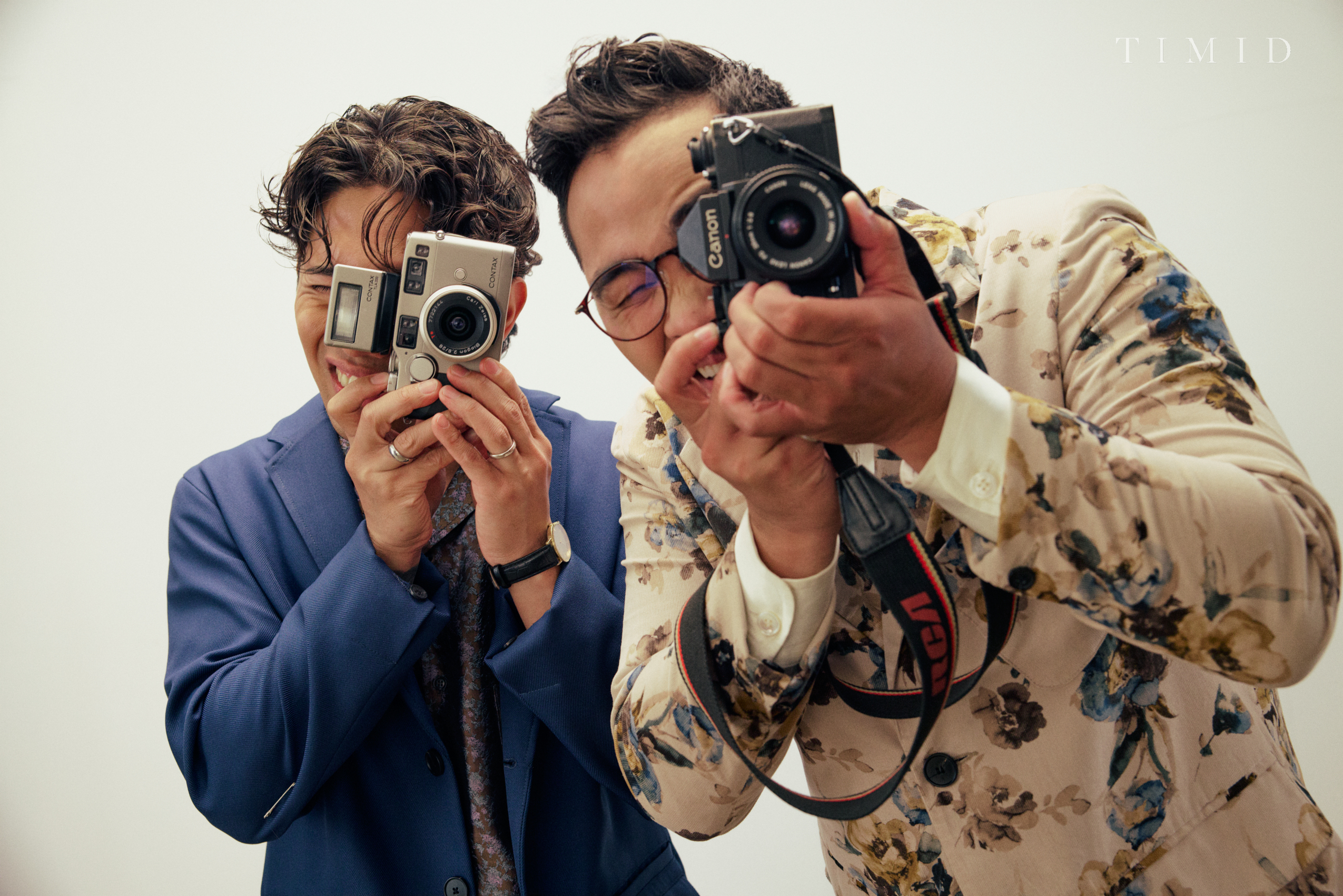
“Gold Gala was that faraway goal that we never thought we'd be a part of," Cabal said. In March, The Lounge Booth celebrated its third year back shooting at the Gold Gala, and from the duo’s eyes, the job feels less like shooting and more like building a legacy.
“We've become documenters of culture," Guinto said. “Each person that works with us is handpicked, and the fact that that came from what we were doing four years ago says a lot about what we do." Cabal, for his part, remembers his freelancing days, traveling the world and being his own boss. “There is a time where you’re just a freelancer, and you think about what’s next.”
What’s next is a permanent public room. Inspired by the portrait studios of HIMO, China's largest modern, full-service photo studio chain, Guinto and Cabal are again sharing their space with their community, but this time at a wider scale. “The Lounge Booth became bigger than what we expected it to be, but to me it blossomed into something that the industry needed," Guinto said. "It was a human experience that brought people together."
While the room they're building is literal, Guinto described this as an opportunity to break out of one. "We want people to know that they can be original. You can build companies. It doesn't matter who you are, because being Asian, you're taught to play it safe. We want the next generation of Asian creatives to know that they can be original. They can be whoever they want without abandoning their identity and their culture."
Still, Guinto accepts that’s easier said than done. "It's hard to reach out. It's scary to be told no. But you're never going to find out if you don't knock on a door,” he said.
For the former laboratory researcher, chasing his dream meant abandoning a security net. For Cabal, it meant years of shooting minute life with no one watching. Neither dreamt of a company like The Lounge Booth, and neither could have described, at the time, what he was actually looking for. What they found, it turns out, is visibility—approximately 15 seconds of it—and for the everyday people Guinto and Cabal now shoot, every frame is a powerful look of themselves they didn’t know they had.