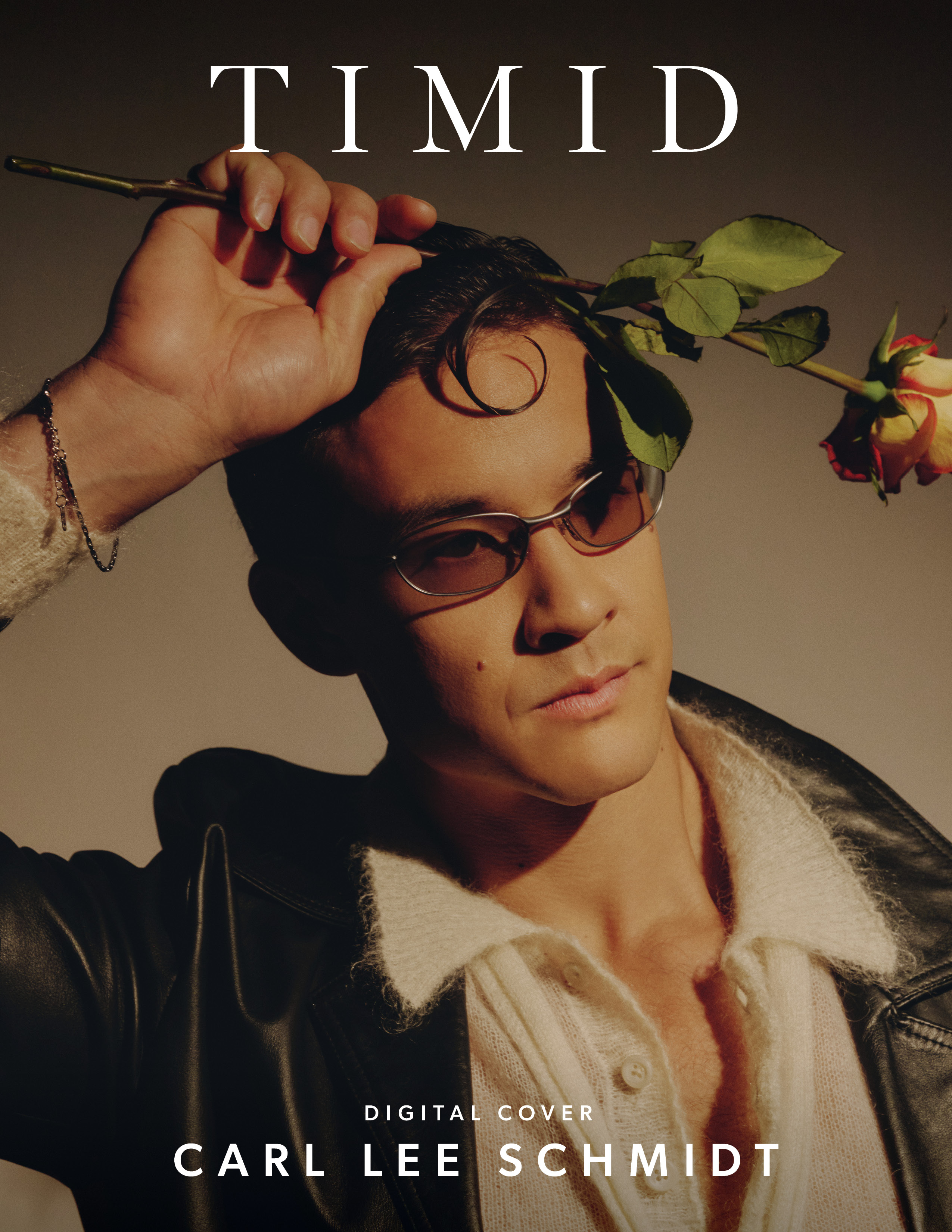
-
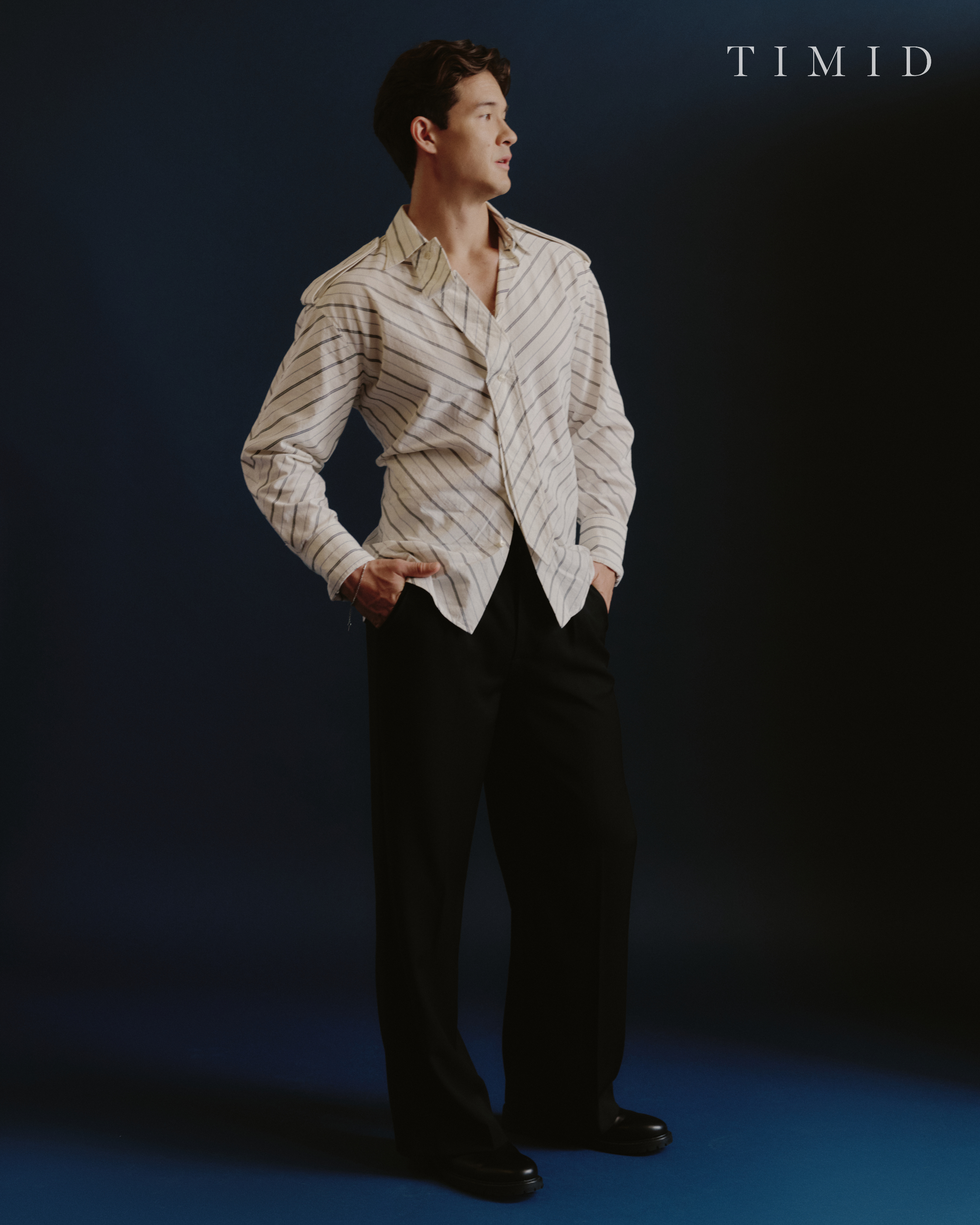
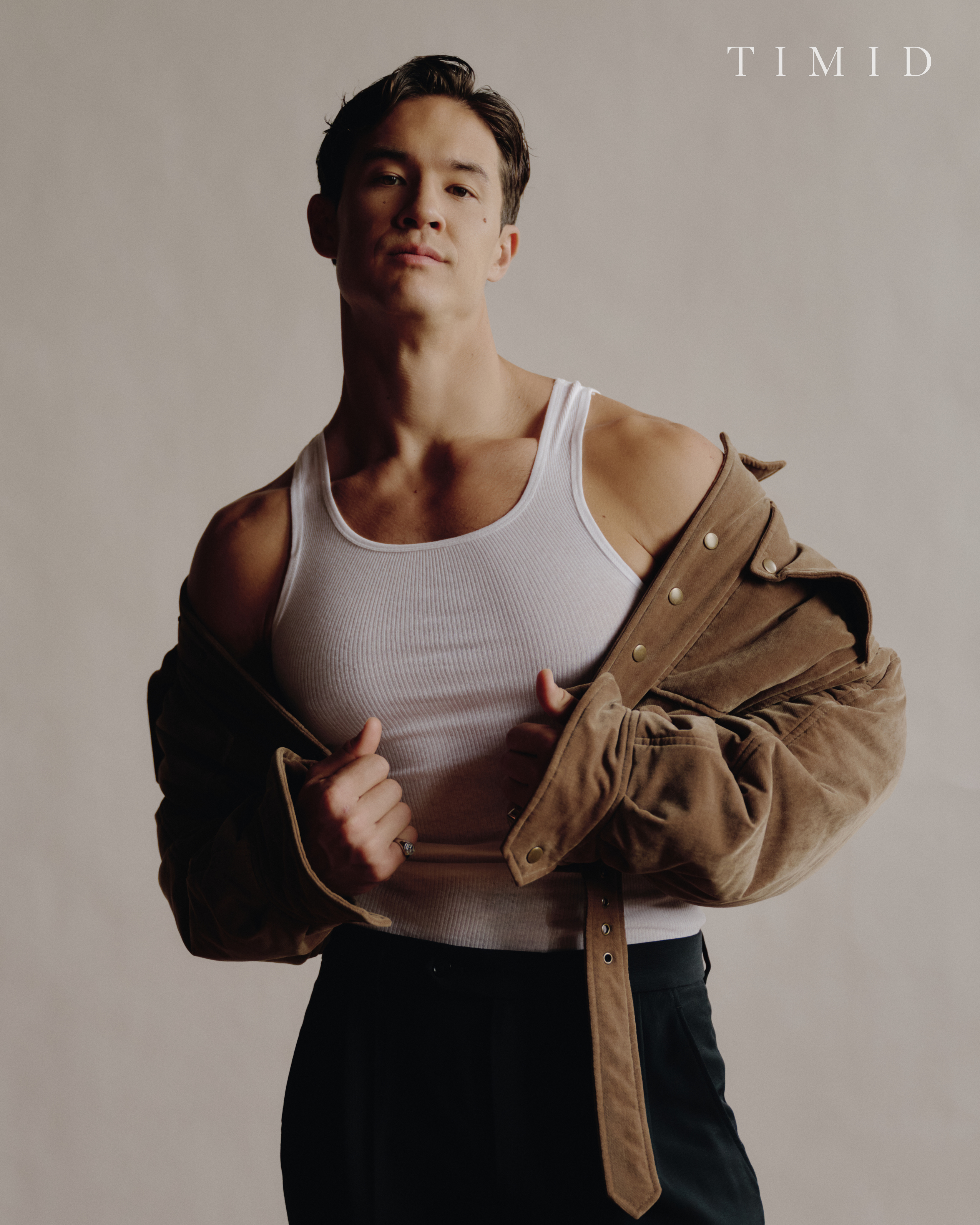
Talent: Carl Lee Schmidt @carl_witness_lee
Words: Lan Thi Vu @lan.thi.vu
Photos: Ken Medilo @kenmedilophoto
Fashion: Christina Corso @christina_corso
Hair & Skin: Sophia Porter @thesophiaporter for Exclusive Artists using Unite Haircare
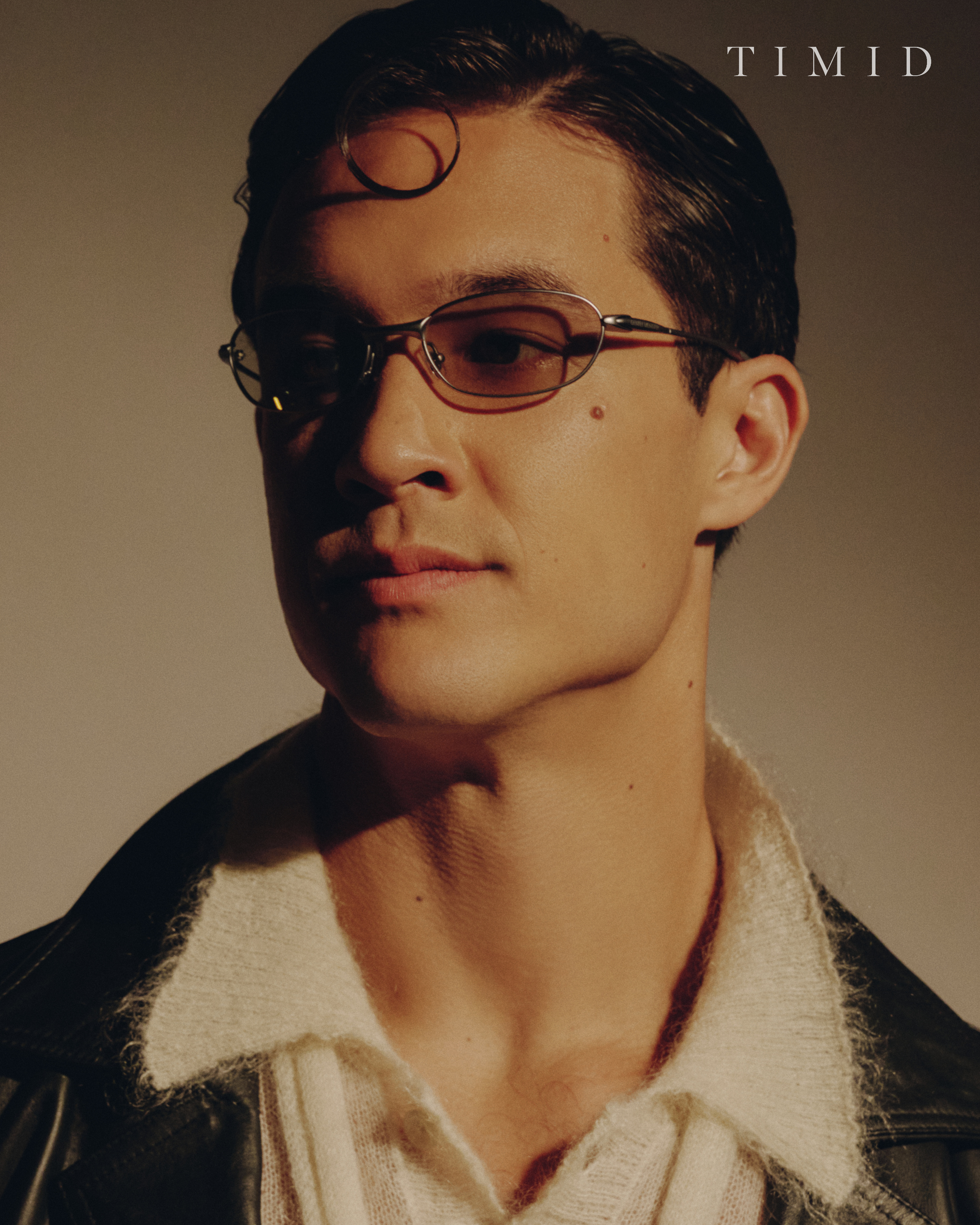
Carl Lee Schmidt greets me from LA in a heather-grey muscle tee, tousled hair, and all smiles. There’s this boyish charm to him that you can’t help but smile back. However, underneath this ease, there’s a flicker of nerves. I tell him that my process is super casual, and he can skip any uncomfortable questions. He nods, and we begin talking. Before long, 30 mins have passed, and Schmidt thanks me and jokes, “It was like a therapy session.” I respond with a laugh, but after our call, I can’t help but think that he is trying to figure out how to sit with this fame in real time, from the pressures of the nickname “Prince Charming” to every comment, picture, and like on social media being scrutinized.
While speaking to him, there’s this quiet unguardedness that can draw people to him. The same one America came to love and see during Love Island USA. For instance, when Schmidt was filmed releasing a moth into the night. Or when he was caught on camera softly murmuring, “it’s okay, it’s okay” while watching his connection, Aniya Harvey, go through a tough, emotional experience. That same tenderness may be exactly why America voted him back in. Schmidt entered the reality show through Casa Amor, was sent home only to return, and finished as season runner-up alongside Aniya.
In our conversation, Schmidt opens up about his experiences in the Villa, and what the audience didn’t see. Then through his endeavors such as Hapa Strong, salsa dancing, and his physical therapy work, he’s redefining “masculinity” for himself, and how he shows up for his loved ones and community.
Carl Lee Schidmt: What they got right was me feeling proud about my Asian heritage. I talked about my beads. I talked about some idioms. I talked about my grandpa and my mom. I brought in some Japanese philosophy, and I'm glad they showed most of that. I also taught all the boys Mandarin in the villa. That was the extent of what I hoped they'd show, and they did show most of it.
I didn't expect them to show me releasing the moth into the air, or show me saying, “It's okay, it's okay.” I even forgot that I said that, and it was just kind of in the moment. I said it so quietly that I didn't think they'd pick up anything, so that was surprising.
What they didn't get right…okay, I'm not a secret billionaire. Everybody talks about my posture, first of all. To explain my good posture—I'm a personal trainer, so I always preach shoulders back and down, proud chest. That's just the basics. So, not a secret billionaire, but I wish I was.
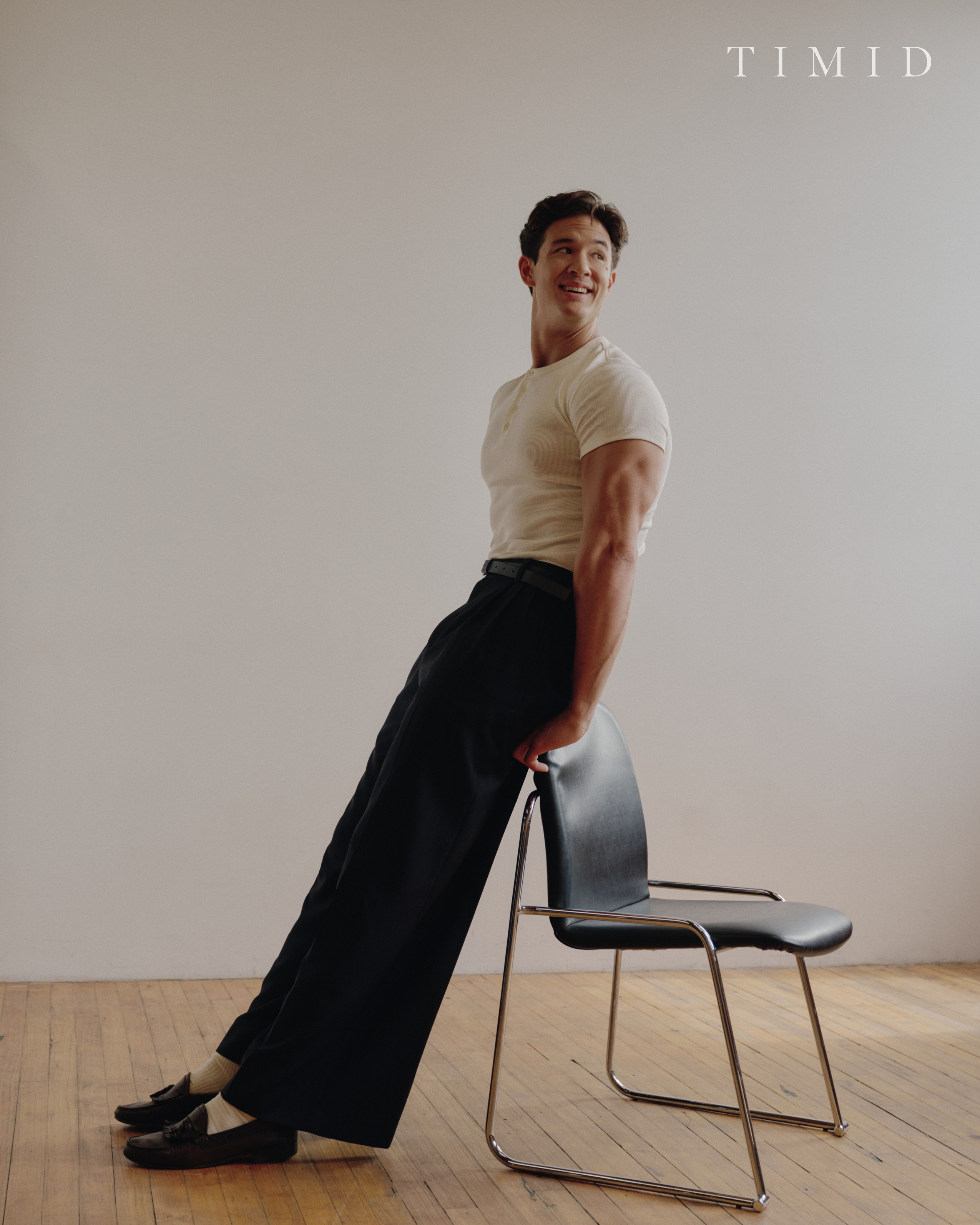
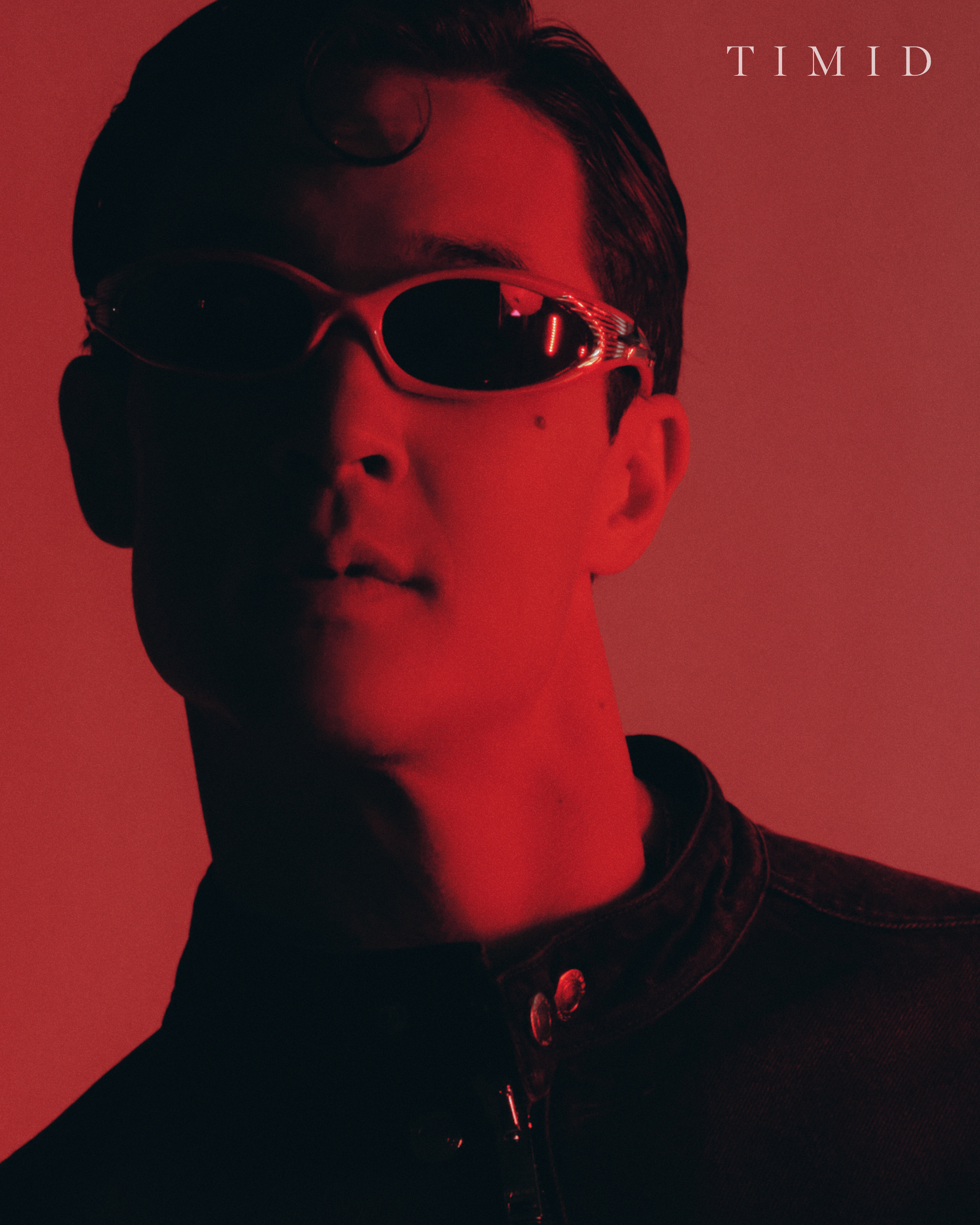
CLS: Oh! I'd have to say Dylan was the best at Mandarin! He got the tones right, and that's the hardest part. If you say it with the wrong tones, it's gibberish. Dylan's pretty good, and Sincere is also pretty good.
CLS: Definitely. I brought that shirt, and I didn't know when it would be the right time to wear it. There were approved outfits for Aftersun, and I just threw it on. I wanted to honor that side of my family, especially because I thought I was getting kicked off and wanted to have one last hurrah. Sentimental value for sure.
CLS: I really do appreciate most of the fan base seeing me as the Prince Charming, the gentleman who comes in. That's a great storyline for me, but I also feel like I got very lucky with my connection, and that it went the way it went. If I'd come in very early, who knows what would have happened, who knows how it would have played out. It does come with some pressure, because now I feel pressure to almost stay perfect and not make any mistakes.
Whenever I post a picture and Aniya's not in it, everybody's asking, “Where's Aniya, where's Aniya?” I'm very proud of that connection, and I do post with her a lot, but I also want to have my own brand and my own personality. We're all our own people too. So there's some pressure there, but it's nothing I can't handle.
CLS: I think step one was turning off my comments. Although a lot of the comments were really nice and showed a lot of love for us, there was a lot that was telling me what to do, how to move, people saying they're disappointed because I did this or said that.
Once I turned that off and stopped reading the comments on other people's posts too, I think I was just a lot more myself. I could finally take in my own info, and the people close to me could still tell me what they thought. Once I silenced some of the noise, it was a lot easier to just act as myself.
CLS: Definitely. As long as I stay true to myself and don't disappoint myself, I'm fine. My mom always says, “If you have a choice between disappointing yourself and disappointing someone else, disappoint someone else.” So I guess that's the role I'm taking right now.
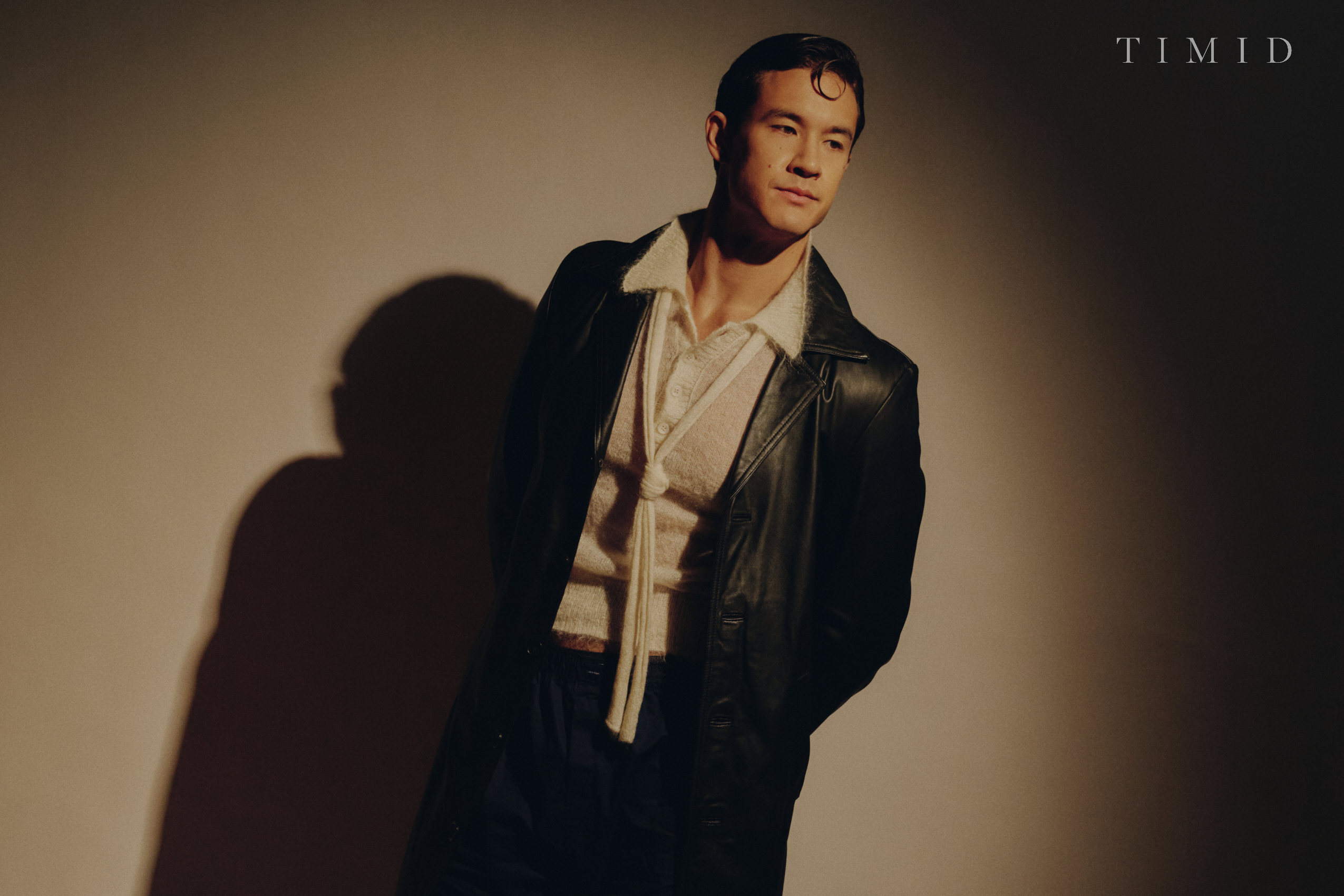
CLS: Well, before volleyball, I played football, lacrosse, and basketball—but football mainly. That's the sport I played in college before I got injured, and then I switched to volleyball. Our coach would always say to the parents, “Yes, I'm teaching your sons to be good football players, but first I'm teaching them to be good young men.” That's how he prefaced it. He really used football as a tool to teach hard work, delayed gratification, brotherhood, and healthy masculinity. He never tolerated any slander on any of the girls' teams. He'd always say, “Hey, the girls have a field hockey game, let's go watch that after practice.” So through his teachings and his coaching, it was very much: be a gentleman first, and an athlete second.
CLS: Definitely. We both grew up similarly and went to the same high school. He's half Japanese, I'm half Chinese. We both wanted to play football, but there are very few Asian American football players. Proportionally, there just aren't many. You don't see a ton of portrayals of Asians as a masculine presence in the media.
Throughout high school, we both struggled with wanting to play football and not wanting to be nerdy, not wanting to be typecast as the Asian who's really good at math. Justin would intentionally dumb himself down in classes, and we'd both intentionally hit the gym really hard because we wanted to break that stereotype. That kind of just bled over naturally. We thought, if we felt like this growing up, felt out of place, there are probably others who feel like that or have felt like that. So we wanted to create Hapa Strong as a safe space, a community for young mixed Asian men who feel like they're in a similar spot—typecast, not told to be strong or masculine, told to just be quiet. That's the basis of it, but we do want to be inclusive of anybody who shares that heritage and anybody who supports the mission.
CLS: I revert back to what I learned as a dancer. There's a strong masculine energy and a strong feminine energy, and it's not always about gender. First of all, it's about being very protective—you don't want to lead them into another couple, have somebody step on their feet. So first, being a strong, protective presence. Second, being gentle but firm. In salsa, when you lead a move, you can't half-ass it, or they won't know what you're doing, so you want to be firm and direct with your movements.
You also want to be in tune with the other person’s emotions too. The whole dance is—I'm leading, but I'm giving them space to also express themself. The other person is the one making the dance look beautiful, doing all the styling. I'm giving them the space to do that. So it is a dance, but I think it's one of the purest representations of healthy masculinity.
CLS: I grew up with two sisters, so I basically live by the mantra: I wouldn't want anybody saying anything like this about my sisters, and if I wouldn't want somebody to say this about my sisters, then I better not say it about somebody else. When they're not in the room, they can't really stand up or defend themselves.
I try to take everybody's thought process into consideration. This is true with all people. That's just who I am. I probably show a little more grace than I should, and I give people the benefit of the doubt way too often. But that's just who I am, and that's how I was raised.
CLS: It all started because I was weight training an 85-year-old woman in Nantucket. Sometimes she was a little moody, a little sassy, but by the end of the session she was always super grateful because she knew I was really trying to help her and honestly trying to keep her alive. She kept falling and breaking her arm. We'd rehab that arm, but I was also training her leg strength, stability, balance, and mobility. That's how it started, and I thought, I really need to be doing this for the people I love too.
My mom was a great athlete. She still plays volleyball, but she doesn't really weight train that much. Through everything I've learned as a personal trainer and going back to school to become a physical therapist, weight training is huge for bone density and muscle growth. She can't just play volleyball. So I started training her at the gym, and we made a little deal: I'd train her twice a week, and she'd meal prep for me, bring me a full week's worth of chicken breast. It was a nice little trade—she loves to cook, and I love to be in the gym.
What I learned from her is that patience is key. She'll almost turn off her brain when I'm around. I don't know how many times we've done the same exercises, but she always needs cues, always needs someone to guide her. Part of me is like, Mom, you know how to do a dumbbell bench press, you know the proper form, but she still wants me there to spot her, make her do a couple more reps, and she always says, “I always just get a better workout with you.” I'm like, well, that's what I'm here for, I'll be your trainer. So, a little more patience with her.
CLS: I'm very excited for the direction Hapa Strong is going, because it's not just a clothing brand. I'm more excited about the community it could build. I'm already getting opportunities like this where I get to speak about my experience and bring that to light. AAPI clubs and colleges are asking me to speak, and I've had Asian people come up to me and say, “Thanks for representing our culture.” Little comments like that make me feel like I've achieved what I set out to do.
When I’m asked why I wanted to be on Love Island, I'd say, first of all, of course, it's to find love, find connections, find a partner. I want to find my person. But also, I wanted to show America that Asian men can be masculine, they can be sexy, they can be desirable. So the fact that that's coming across, I'm very proud of that. I'm really excited to see that community grow, and hopefully I can make an impact on some people like me—the younger me who didn't quite know he belonged in America because of how he looked.